
Best Gaming Glasses 2026: Do Blue Light Gaming Glasses Work? An Optometrist's Honest Guide
Long sessions at a monitor leave a lot of gamers and desk workers with tired, dry, burning eyes and a headache by evening. Do gaming glasses actually help? As an optometrist, here's an honest 2026 guide: what really causes screen eye strain, what a yellow gaming lens does (with measured numbers), why your prescription matters more than the tint, and which glasses to wear for late-night sessions so you can still sleep.
By Suraj Dubey, optometrist (10+ years, 10,000+ eye exams) · Updated October 2026
Quick answer
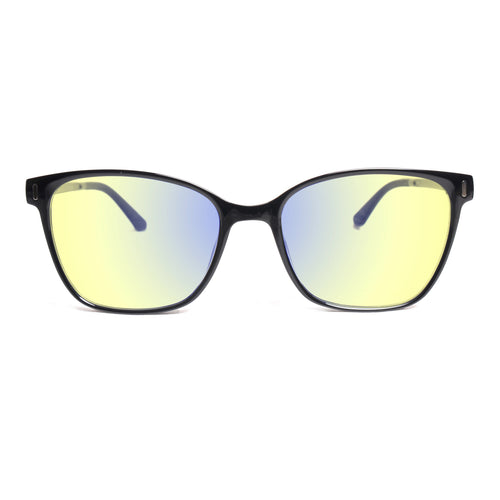
For daytime gaming and screen work, pick a yellow lens that cuts glare and short-wavelength light while keeping the screen bright — and get it in your exact prescription if you wear one. Sleepaxa DayActive passes 36.8% at 450 nm with 76.5% overall brightness and 100% UV400. For gaming after dark, switch to Amber to protect your sleep.


Shop all 34 gaming & computer glasses →
Free US & EU shipping, duties included · 30-day returns on zero-power glasses
What actually causes gaming eye strain?
"Digital eye strain" (computer vision syndrome) isn't caused by one thing. In the clinic, the usual culprits are:
- Blinking less. When you concentrate on a screen, your blink rate drops sharply, so your eyes dry out — the burning, gritty feeling after a long session.
- Uncorrected or outdated prescription. Even small amounts of astigmatism or long-sightedness make your eyes work harder at screen distance. This is the most underrated cause I see.
- Glare and contrast. Bright screens in a dark room, reflections from lamps and windows, and overhead lights all add visual load.
- Focusing for hours at one distance without a break.
- Late-night light that disrupts sleep, so you start the next day already tired.
Do gaming glasses work? The honest answer
A 2023 Cochrane review (Singh et al.) found that clear blue-light-filtering lenses probably don't reduce eye strain in the short term. That matches what optometrists see: a near-invisible coating isn't the fix.
What does help is a combination: the right prescription, less glare, better perceived contrast and good screen habits. A properly tinted yellow lens with an anti-reflective coating addresses glare and contrast, many gamers find yellow makes edges and text feel crisper, and building your prescription into the same pair removes the biggest hidden cause of strain. And at night, a strong amber lens is what protects your sleep — something a clear coating can't do.
DayActive yellow lens: the measured numbers
Most gaming glasses say "blocks blue light" and stop there. Here's exactly what Sleepaxa DayActive transmits, from our own spectrophotometer reports (tested to EN ISO 12312-1, ANSI Z80.3 and AS/NZS 1067.1):
| Wavelength | Transmission | What it means |
|---|---|---|
| Below 400 nm (UV) | 0% | UV fully blocked (UV400) |
| 450 nm (screen blue peak) | 36.8% | Short-wavelength load cut by roughly two-thirds |
| 550 nm | 76.5% | Working brightness kept |
| 700 nm | 95.0% | Colours on screen stay usable |
| Overall (luminous) | 76.5% | Filter Category 1 — fine indoors and for daytime outdoors |
Plus a five-layer coating stack: scratch-resistant hard coat, anti-reflective, tinted core, hydrophobic and oleophobic — so fewer reflections from your monitor and RGB lighting, and easier cleaning.
Day gaming vs night gaming: use the right lens
Daytime · work & play
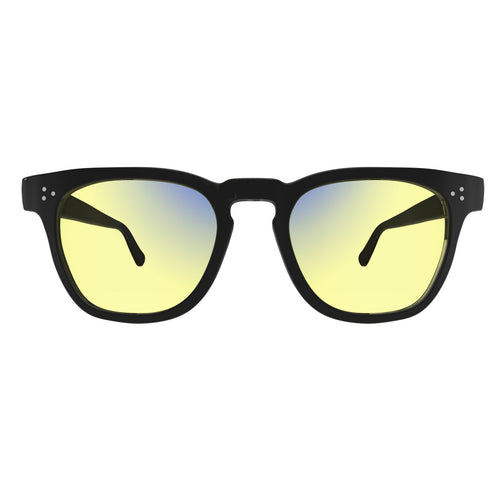
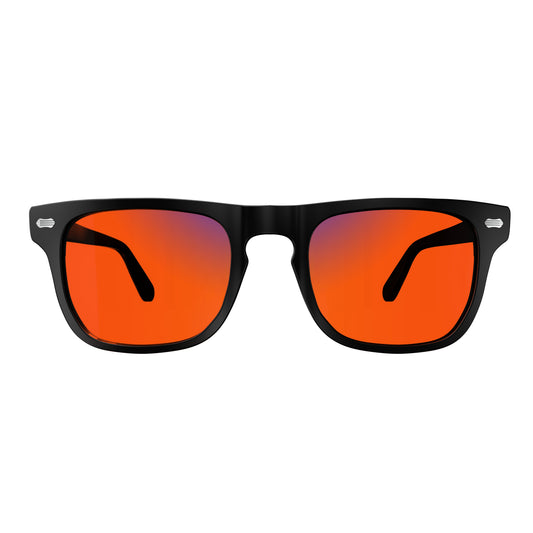
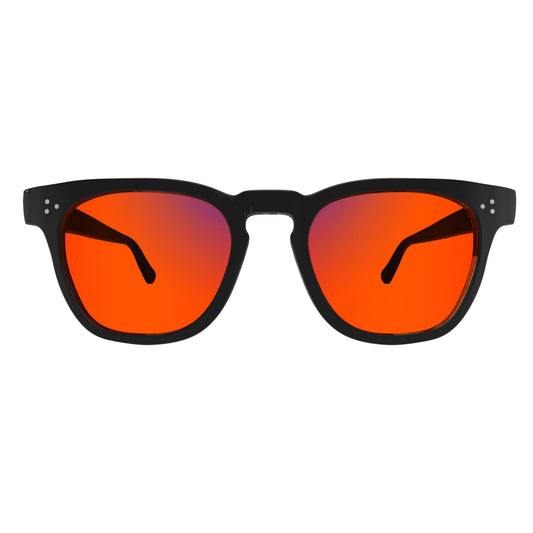
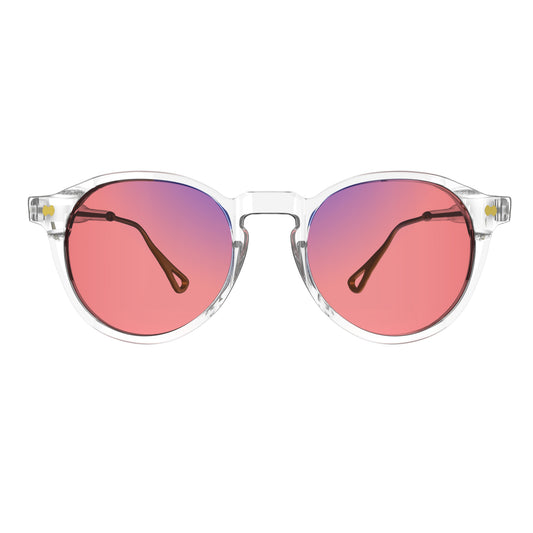
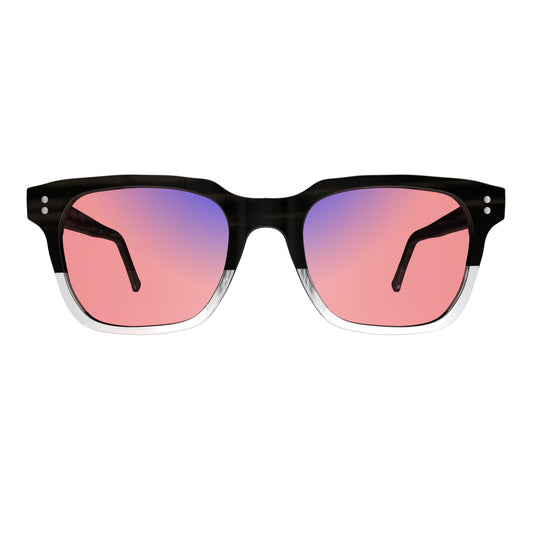
DayActive yellow
Cuts glare and short-wavelength light while keeping the screen bright and colours accurate enough for gaming, coding and design work. Indoors and daytime outdoors.
Shop DayActive →After dark · late sessions
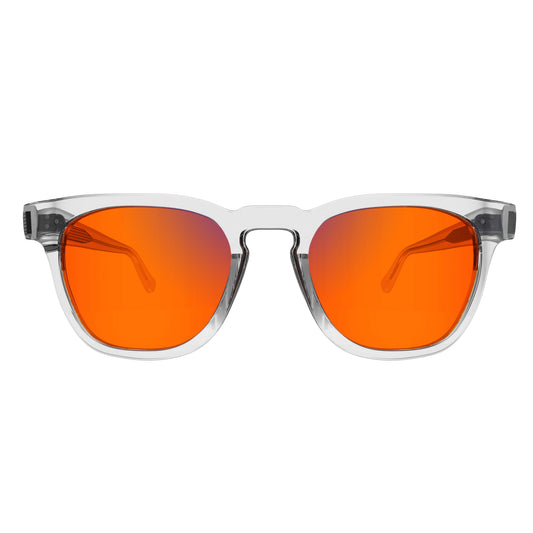
Amber sleep lens
Blocks 99.5%+ of light up to 500 nm, so a late match doesn't tell your brain it's daytime. Screens look warmer but stay perfectly playable. Read the sleep glasses guide.
Shop Amber →Get migraines or headaches from screens and bright rooms? That's a different problem — see blue-light vs FL-41 glasses.
Prescription gaming glasses
If you wear glasses — or haven't had an eye test in two years — this matters more than any tint. Gaming in a prescription that's slightly off makes your eyes fight to focus for hours. Every DayActive frame is available in single vision, with progressive and thinner 1.56 / 1.67 / 1.74 lenses as upgrades, cut on prescription-grade CR-39. Our optometry team checks your prescription before your lenses are made. More in our prescription guide.
How to choose gaming glasses
- Measured lens data, not just "blocks blue light".
- Anti-reflective coating to cut monitor and RGB reflections.
- Light weight — Featherlight ULTEM frames are about 12 g, comfortable with a headset.
- Thin, flexible temples that don't press under headphone cups.
- Right size. Check the three numbers inside your current frame (e.g. 48-21-145). Sleepaxa lists exact sizes on every product page, from small (Clarte) to wide.
- Your prescription built in.
Level up your setup
34 frames · DayActive yellow · zero power or prescription · from $99
Shop Gaming Glasses →Screen habits that help as much as glasses
- 20-20-20: every 20 minutes, look at something 20 feet away for 20 seconds — easy to do between rounds or loading screens.
- Blink on purpose and keep the room from being too dry; lubricating drops can help.
- Monitor at arm's length, top of the screen at or just below eye level.
- Match screen brightness to the room and add soft background lighting instead of gaming in total darkness.
- Get your eyes tested every one to two years.
FAQ
Do gaming glasses actually work?
Clear blue-light coatings alone show little benefit for eye strain. A yellow lens with anti-reflective coating can reduce glare and make contrast feel sharper, and having your correct prescription in the same pair removes one of the biggest causes of strain.
Why are gaming glasses yellow?
A yellow tint filters part of the short-wavelength blue light from screens, which many people find reduces glare and makes edges and text feel crisper, while keeping the screen bright.
What are the best gaming glasses in 2026?
Look for measured lens data, an anti-reflective coating, a light frame that works with a headset, and your prescription built in. Our most-chosen pair is the Clarte Jet Black with DayActive lenses.
Should I wear gaming glasses at night?
For gaming after dark, an amber lens is better because it blocks the blue light that delays sleep. Sleepaxa Amber blocks 99.5%+ of light up to 500 nm.
Can I get gaming glasses with my prescription?
Yes. Every DayActive frame is available in single vision, with progressive and thinner high-index lenses as upgrades.
Do gaming glasses work with a headset?
Yes, if the frame is light with slim temples. Sleepaxa Featherlight frames weigh about 12 g.
Can I wear DayActive glasses outdoors?
Yes. DayActive is Filter Category 1 with 100% UV400, suitable for indoor and daytime outdoor use.
Shop DayActive Gaming Glasses →
Related: Best sleep glasses 2026 · Why 50,000+ customers choose Sleepaxa
Educational content written by an optometrist. Individual experience varies; see an eye-care professional if eye strain, headaches or blurred vision persist.
Tags: