

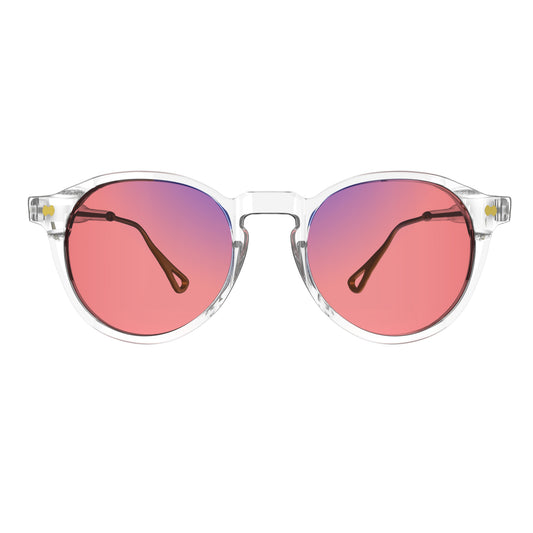
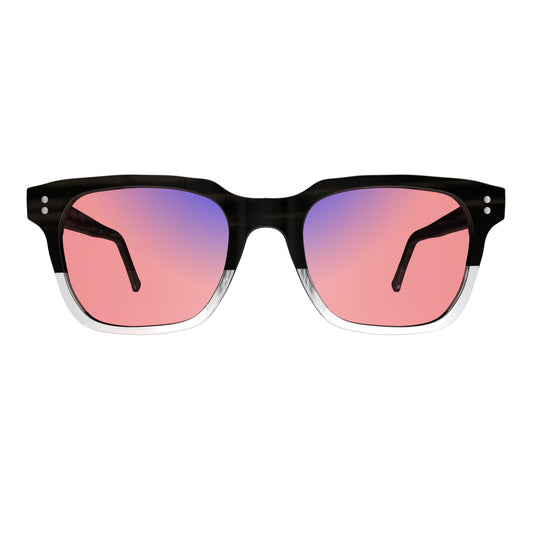

Why FL-41 Prescription Glasses Are a Better Choice Than FL-41 Clip-On Glasses
Living with chronic migraines or extreme light sensitivity (photophobia) is not simply about disliking bright lights. For many people, everyday lighting—such as fluorescent bulbs, LED panels, or prolonged screen exposure—can trigger intense discomfort, visual stress, or neurological symptoms that interfere with daily life.
When searching for solutions, many individuals come across FL-41 lenses, a specialized rose-tinted optical filter frequently discussed in clinical optometry and neuro-ophthalmology literature for light sensitivity support. However, an important decision follows:
Should you choose FL-41 prescription glasses or FL-41 clip-on glasses?
While clip-ons may appear convenient or cost-effective at first, there are significant optical, neurological, and practical differences between an accessory solution and an integrated prescription lens. This article explains why FL-41 prescription glasses are generally the better long-term choice for individuals with photophobia or migraine-related light sensitivity.
Our pick
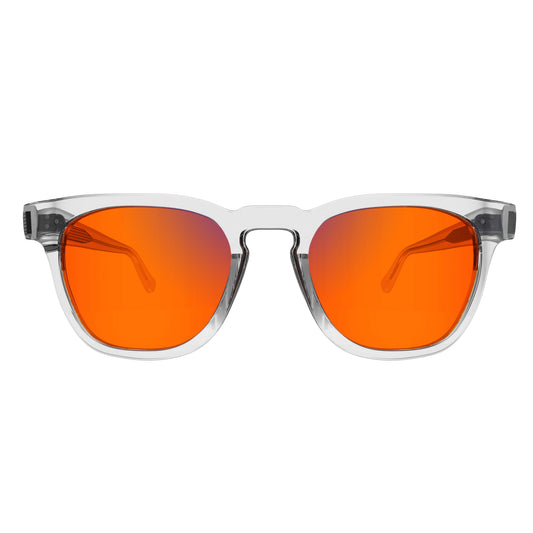
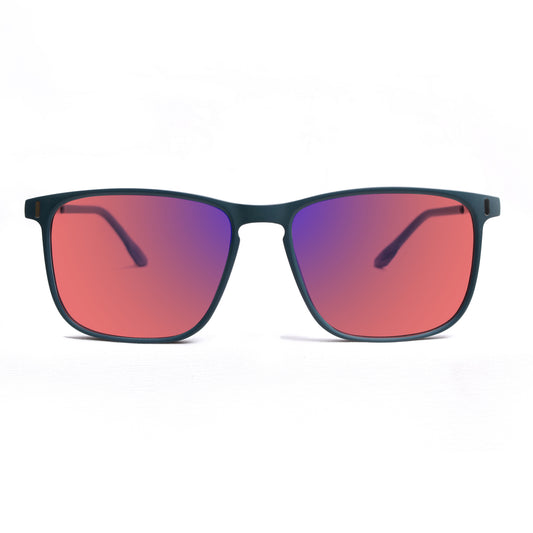
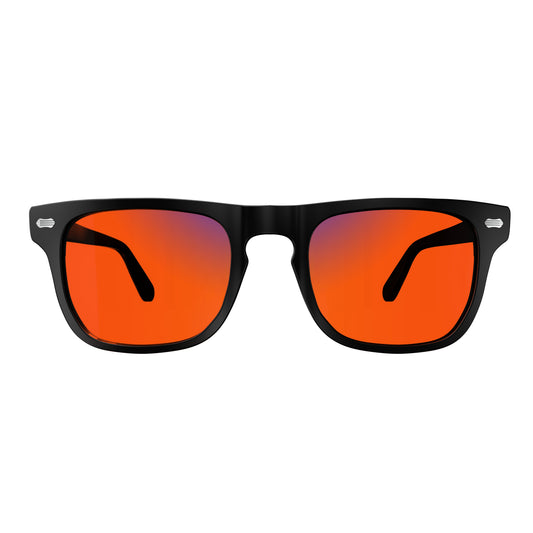
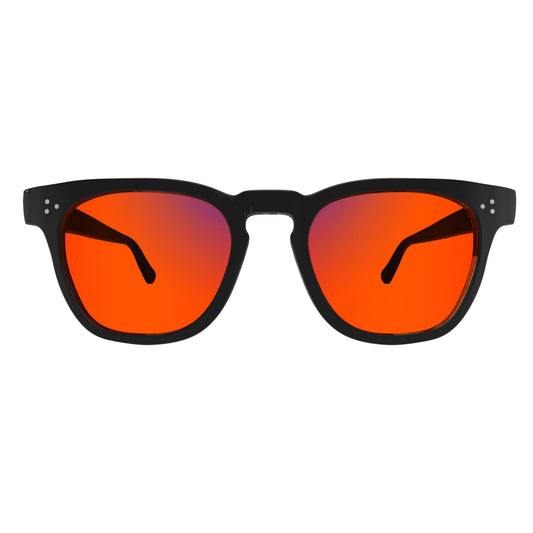
Sleepaxa prescription FL-41 glasses — the tint is built into your own prescription lens (single vision, progressive or high-index), in FL-41 Light for mild sensitivity or FL-41 Dark for severe photophobia. Every tint batch is spectrometer-verified.


Shop prescription FL-41 glasses →
Free US & EU shipping, duties included · 30-day returns on zero-power glasses
What Is FL-41? (The Science Behind the Tint)
FL-41 is not merely a cosmetic pink or rose tint. It is a spectrally selective optical filter originally developed in the 1990s to help reduce discomfort caused by fluorescent lighting. Since then, it has become one of the most-researched and widely recommended filters for managing light sensitivity in migraine-prone individuals.
How FL-41 Works: Wavelength Filtering
Light is composed of different wavelengths, and research suggests that individuals with migraine and photophobia can be particularly sensitive to certain bands of blue-green light, especially in the 480–500 nanometer range.
FL-41 lenses are designed to:
-
Reduce transmission of visually irritating wavelengths
-
Allow more comfortable, lower-stress light to pass through
-
Support visual comfort during prolonged indoor or screen exposure
A helpful analogy is noise-canceling headphones for the eyes—the goal is not darkness, but reduction of disruptive visual input.
Why Light Sensitivity Requires Precision, Not Accessories
During migraine or heightened light sensitivity, the nervous system can become visually hyper-responsive. In such cases, even small inconsistencies in visual input may increase discomfort.
This is why optical solutions for photophobia must be precise and stable, rather than layered or temporary.
Clip-on lenses are, by design, an external add-on placed over existing prescription glasses. This creates two separate optical surfaces, which the visual system must process simultaneously. For light-sensitive individuals, this can introduce unnecessary visual strain.
Precision matters because photophobia is influenced not only by direct light, but also by:
-
Peripheral light exposure
-
Internal reflections
-
Visual alignment and stability
FL-41 Prescription Glasses vs FL-41 Clip-On Glasses
The most common challenges with FL-41 clip-ons stem from fit, alignment, and optical consistency.
Common Issues with Clip-On FL-41 Glasses
-
Light leakage from the sides, top, or bottom
-
Added weight on the nose bridge, which may increase tension
-
Internal reflections between layered lenses
-
Shifting or tilt, causing visual instability
In contrast, FL-41 prescription glasses integrate the filter directly into the corrective lens, allowing light to pass through a single, optically aligned surface.
Comparison Table: Prescription vs Clip-On FL-41 Glasses
| Feature | FL-41 Prescription Glasses | FL-41 Clip-On Glasses |
|---|---|---|
| Optical Alignment | Precisely centered to the pupil | Often misaligned or tilted |
| Filtering Consistency | Uniform across the entire lens | Inconsistent due to gaps |
| Peripheral Light Control | Better (frame-dependent) | Higher risk of light leakage |
| Comfort for Long Use | High | Often reduced due to weight |
| Prescription Integration | Fully integrated | Layered over existing lenses |
| Visual Stability | High | May cause reflections or shimmer |
| Long-Term Usability | Suitable for daily wear | Typically short-term or trial use |
Quick Takeaway
If you already wear prescription glasses and experience migraine-related light sensitivity, integrated FL-41 prescription lenses generally provide more consistent comfort and visual stability than clip-on alternatives.
Ready to switch from clip-ons? Choose a frame and add your prescription → Our optometry team checks every prescription before your lenses are made.
Optical Alignment and Visual Comfort
Prescription lenses are manufactured so the optical center aligns precisely with the wearer’s pupil position. This minimizes unwanted prismatic effects and reduces visual effort.
Clip-on lenses, however, often shift during use. Even slight misalignment can introduce:
-
Visual distortion
-
Increased eye strain
-
Difficulty focusing during prolonged tasks
For individuals with photophobia, such instability may contribute to discomfort rather than relief.
Internal Reflections and Visual Disturbance
When two lenses are layered, light can become trapped between surfaces, creating multiple internal reflections between layered optical surfaces. These micro-reflections may appear as flicker or shimmer.
For individuals with heightened visual sensitivity, such subtle disturbances can be uncomfortable and distracting, particularly during screen use or indoor lighting exposure.
Clinical and Neurological Perspective
From a neuro-ophthalmic standpoint, FL-41 lenses are used to reduce excessive visual stimulation associated with pathways involving the trigeminal nerve, which is commonly linked to migraine-related light sensitivity.
Importantly, the effectiveness of any optical aid depends not only on filtration, but also on consistent wear. Studies in clinical optometry emphasize that comfort and usability strongly influence whether individuals continue using their lenses throughout the day.
Because prescription FL-41 glasses feel and function like regular eyewear, users are more likely to wear them consistently.
Why Eye-Care Professionals Often Prefer Prescription FL-41 Lenses
Optometrists and vision specialists commonly recommend prescription FL-41 lenses over clip-ons due to:
-
Customization: Frame shape and lens size can be optimized to reduce peripheral light
-
Material quality: Prescription lenses use optical-grade materials such as CR-39 or polycarbonate
-
Durability: Integrated lenses are less likely to scratch or shift
-
Visual clarity: Single-surface optics reduce reflections and distortion
Who May Find Clip-Ons Less Suitable
Clip-on FL-41 glasses are often used as a short-term trial, but they may be less suitable for:
-
Individuals with vestibular migraine or dizziness
-
People with higher prescriptions
-
Professionals with long daily screen exposure
-
Anyone requiring stable, all-day visual comfort
Choosing the Right FL-41 Glasses
When selecting FL-41 eyewear, consider the following:
-
Authentic FL-41 spectral filtering, not cosmetic tinting
-
Back-surface anti-reflective coating to minimize reflections
-
Proper prescription accuracy
-
Comfort-focused frame design
Science-driven eyewear brands such as Sleepaxa focus on optical precision and comfort-oriented frame design, which can be important for individuals with light sensitivity.
Not sure which tint strength? Start with FL-41 Light for all-day indoor wear and screens, or choose FL-41 Dark if bright light is severely uncomfortable.
Individual response to spectral filters can vary, and users should choose solutions based on comfort, prescription needs, and professional guidance.
Frequently Asked Questions
Are FL-41 lenses the same as blue-light-blocking glasses?
No. Standard blue-light blockers typically target shorter wavelengths (around 400–450 nm), while FL-41 lenses filter a broader migraine-sensitive range, including wavelengths around 480–500 nm.
Can FL-41 prescription glasses be worn all day?
Yes. Many users wear them indoors throughout the day, especially in offices or retail environments with artificial lighting.
Do FL-41 lenses require a medical prescription?
The tint itself does not require a prescription, but correct vision prescription details are necessary to ensure accurate lens fabrication.
Conclusion
Choosing between FL-41 prescription glasses and clip-on alternatives is ultimately a choice between optical integration and temporary layering. While clip-ons may help some users evaluate tint comfort, they often lack the stability, alignment, and consistency required for long-term use.
For individuals who rely on prescription eyewear and experience light sensitivity, FL-41 prescription glasses offer a more reliable, comfortable, and visually stable solution—supporting daily activities with fewer interruptions from light-related discomfort.
Tags:
Previous
Prescription FL-41 Migraine Glasses for Photophobia | Sleepaxa
Next
The Migraine & Sleep Light Spectrum: Which Wavelengths Trigger Attacks and Ruin Sleep (2026)


