

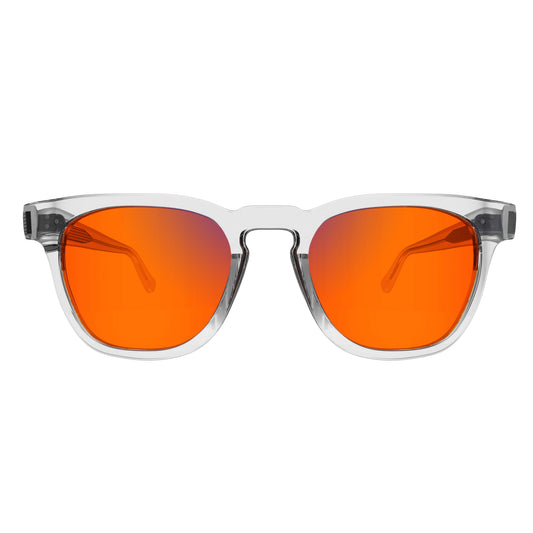
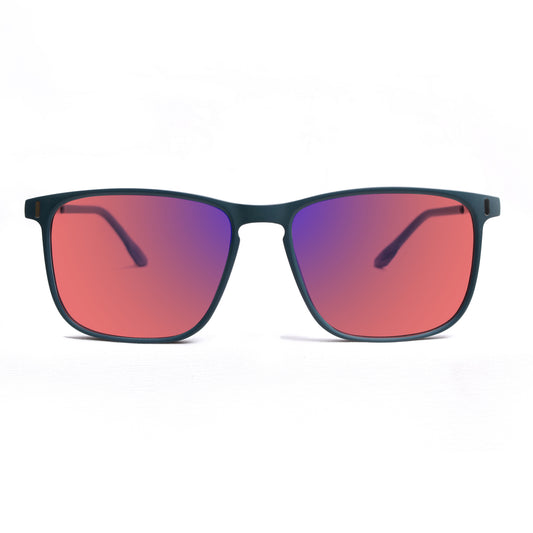
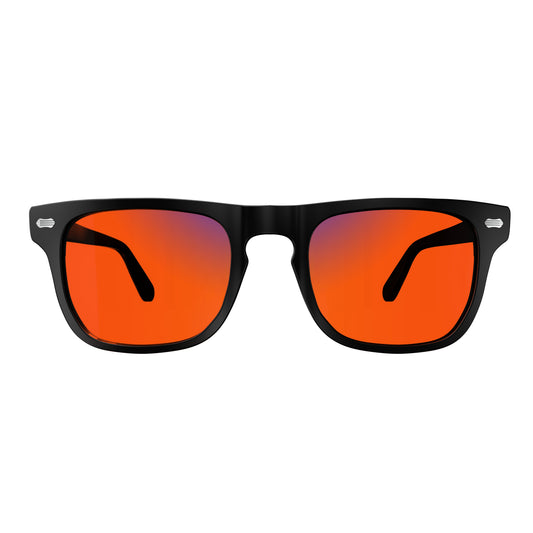
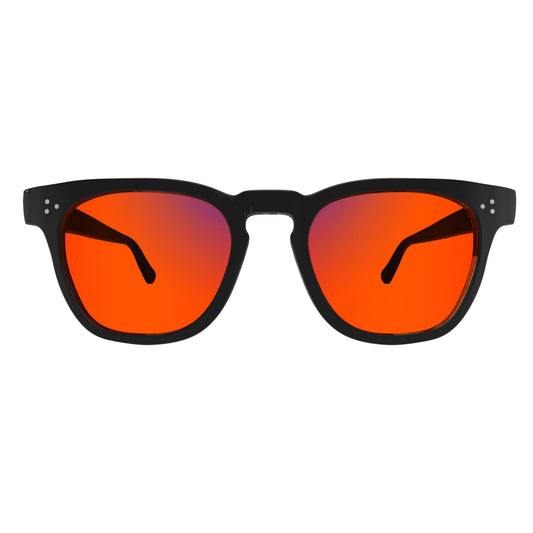
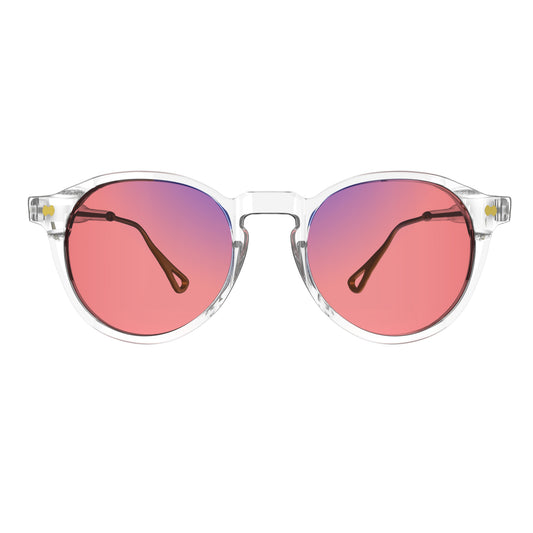
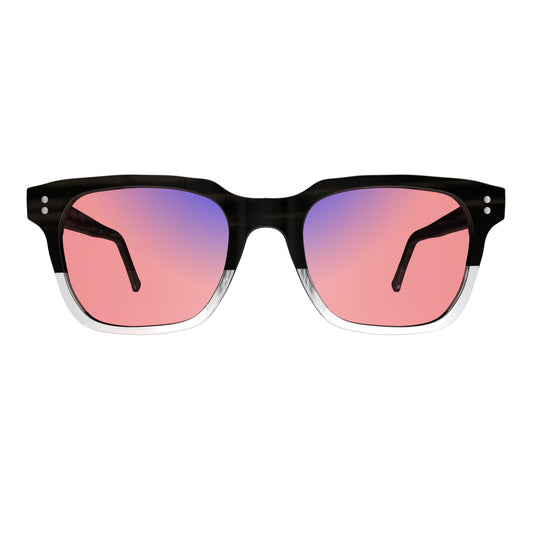
Circadian560 Sleep Glasses | Verified 100% Light Blocking to 560nm
Patented · IN 597482 · Spectrometer-Verified Sleep Technology
Sleep glasses that actually block the light stealing your sleep.
Most “blue-light blocking” sleep glasses stop a sliver of blue and call it a night. Ours go the whole way — and we can prove it. Every Sleepaxa sleep lens is spectrometer-verified, in three strengths so you choose your night.
Why 560nm is the number that matters
Your body’s master sleep signal — melatonin — is suppressed by light through melanopsin, a sensor most reactive up to around 560nm. Block light cleanly to that edge and you protect the signal that puts you to sleep. Ordinary blue-light glasses stop far short. Circadian560 goes all the way.
Three strengths. Pick your night.
| Lens | Blocks | Best for |
|---|---|---|
| Amber | ~100% of blue light to 500nm | Everyday evening wear, screens |
| Red | 100% up to 550nm | Deeper protection, wind-down |
| Circadian560 · flagship | Verified 100% up to 560nm | Maximum melatonin protection |
Amber, red, or maximum — every lens is spectrometer-verified. Because your melatonin doesn’t care about marketing.
Verified, not guessed
Most sleep-glasses brands make a vague “blocks blue light” claim and never show a number. We publish ours. Circadian560 delivers verified 100% blocking up to 560nm — the full edge of the melanopsin range. That’s the difference between a marketing claim and a measured spec.
Your lenses, your way
Available in zero power, single-vision prescription, progressive, bifocal and prism, with high-index 1.67 / 1.74 options. Sleep protection that fits your eyes exactly.
Engineered by researchers, not marketers
Circadian560 uses a patented multi-component chromophore formulation — Granted Patent · IN 597482 — engineered against the melanopsin action spectrum at Acieon Labs, our research division. Developed by clinical optometrist Suraj Dubey — 10+ years, 10,000+ eye examinations — with clinical advisor Dr. Monica Chaudhry (37+ years, former AIIMS New Delhi faculty). Published openly with citable DOIs.
Frequently asked
What’s the difference between Amber, Red and Circadian560?
Strength. Amber blocks ~100% of blue to 500nm for everyday evenings; Red goes to 550nm; Circadian560 is verified to 560nm for maximum melatonin protection.
Can I wear these while driving at night?
No. Red and Circadian560 are deep tints for indoor wind-down before sleep, not for driving.
Are they available in prescription?
Yes — single-vision, progressive, bifocal and prism, plus high-index options.
Do sleep glasses really help?
Blocking evening blue and green light supports your natural melatonin rhythm. Circadian560 is engineered to block that light to 560nm, verified by spectrometer.