

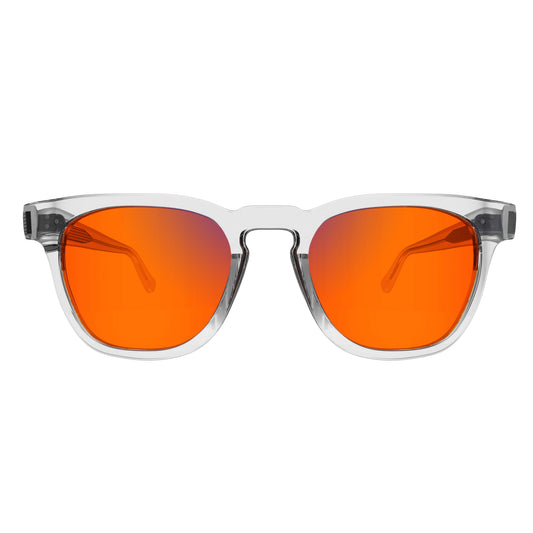
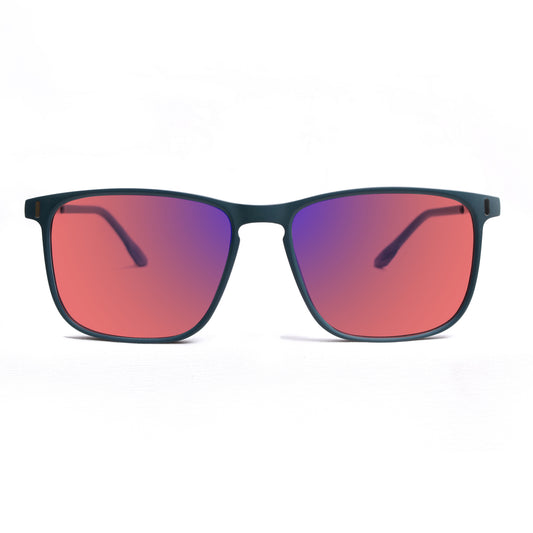
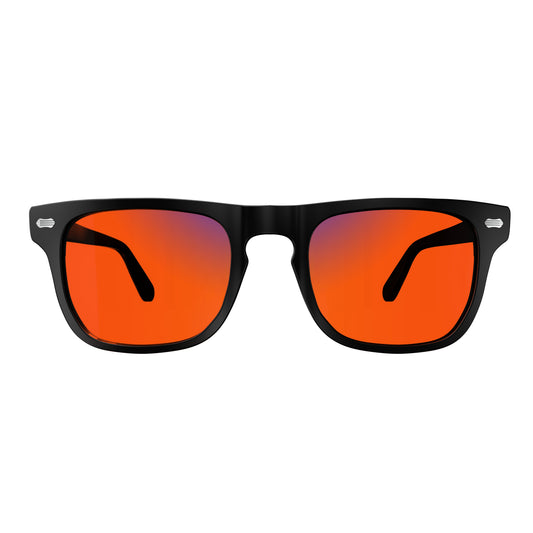
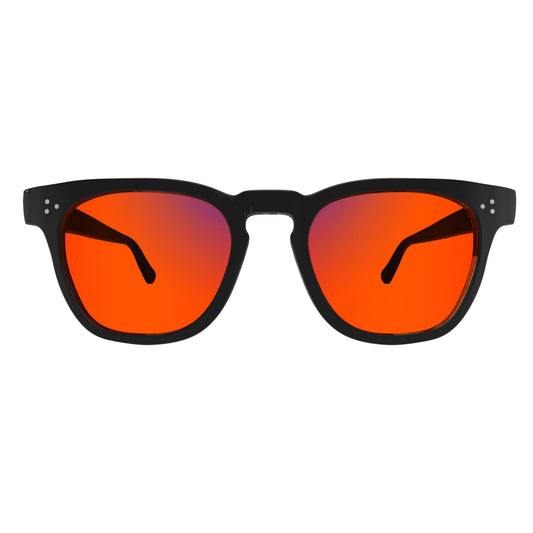
FL-41 vs NeuroCalm FLX+: Why One Tint Isn't Enough (2026)
FL-41 has been the migraine-glasses gold standard for three decades. It works — but it treats migraine light sensitivity as one problem when it's really several. Here's the difference between ordinary FL-41 and a patented dual-band lens.
What FL-41 does
FL-41 is a rose tint that dampens a single broad band of light (roughly 480–520nm) linked to migraine and fluorescent-light sensitivity. It's the most-researched migraine tint, and for many people it genuinely helps.
Where it falls short
Migraine photophobia isn't driven by one band. The melanopsin band (460–490nm), a separate cone-driven band (585–600nm), and a calming green band (520–560nm) all behave differently. FL-41 blocks broadly and can't tell them apart — so it dims light that helps along with light that hurts.
FL-41 vs NeuroCalm FLX+
| Ordinary FL-41 | NeuroCalm FLX+ | |
|---|---|---|
| Bands filtered | One broad band | Two precision bands |
| Green (520–560nm) | Dimmed with the rest | Deliberately preserved |
| Approach | A tint | Engineered spectral filter |
| Protection | Off-the-shelf | Granted Patent 587746 |
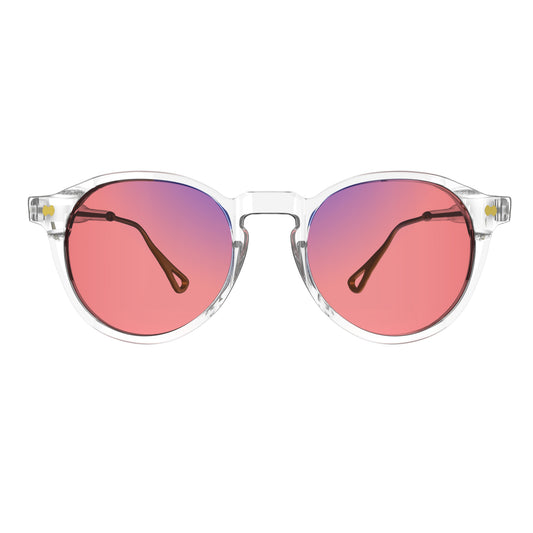
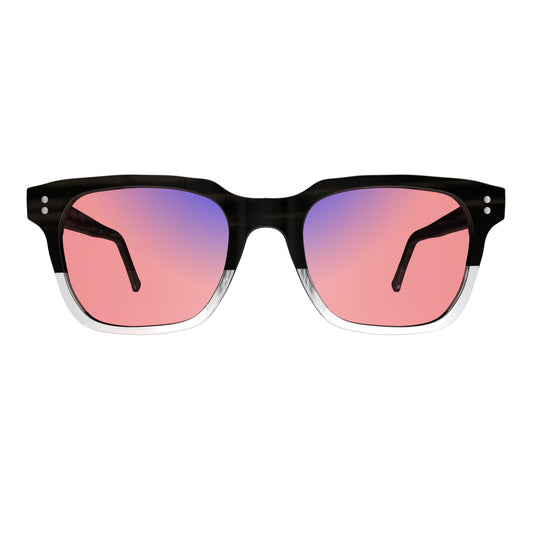
Sleepaxa's patented NeuroCalm FLX+ attenuates the 460–490nm and 585–600nm pain-linked bands while preserving the 520–560nm green band research links to reduced migraine pain. It's FL-41's successor, not its clone.
FAQ
Is NeuroCalm FLX+ just FL-41 renamed?
No. FL-41 filters one broad band; NeuroCalm FLX+ is a patented dual-band lens that targets two pain bands and preserves calming green light.
Should I still consider FL-41?
Yes — FL-41 is well-researched and effective for many. NeuroCalm FLX+ is the next-generation option for those who want more precision.
Educational content. Patent 587746 describes intellectual-property protection, not medical approval. Sleepaxa lenses help manage light sensitivity and are not a medical device.
Tags:
Previous
Prescription Migraine Glasses: Rx, Progressive & Prism Explained (2026)
Next
Sleepaxa vs TheraSpecs: An Honest Migraine Glasses Comparison (2026)


