

Do Migraine Glasses Actually Work? An Evidence-Based Answer (2026)
It's the honest question everyone asks before spending on migraine glasses: do they actually work? Here's a straight, evidence-based answer — including where the science is strong and where it isn't.
The short answer
For people whose migraines and photophobia are triggered or worsened by light, tinted lenses that filter specific wavelengths — especially FL-41 — can meaningfully reduce discomfort. They are not a cure, and results vary by person and trigger. But for light-sensitive individuals, the mechanism is real: filter the trigger wavelengths, reduce the trigger.
What the evidence supports
- Light is a well-documented migraine trigger and photophobia is a core migraine symptom.
- FL-41 is the most-studied migraine tint and has decades of clinical use.
- A narrow green band may reduce migraine pain intensity (Noseda et al., 2016), which is why lens design matters.
What it doesn't do
No lens cures migraine or replaces medical care. Glasses address the light trigger only. Anyone with frequent or severe migraine should work with a clinician.
How to choose wisely
Pick a brand that discloses its lens performance rather than hiding it. Sleepaxa publishes spectrometer-verified data, uses a patented dual-band lens that goes beyond ordinary FL-41, and offers a 30-day return so you can try risk-free. See the research →
FAQ
Do migraine glasses work for everyone?
No. They help people whose migraines are light-triggered or who have photophobia. Results vary by individual.
Are migraine glasses a cure?
No. They help manage a light trigger and are not a substitute for medical care.
How long before I know if they help?
Many people notice a difference quickly in triggering environments like offices and screens. A 30-day trial lets you judge risk-free.
Deeper dive · Updated October 2026
The key studies, in brief
- University of Birmingham (Good et al., Headache, 1991): children with migraine had fewer attacks while wearing FL-41 lenses than with a blue tint.
- University of Utah (Blackburn et al., Ophthalmology, 2009): FL-41 improved light sensitivity and daily function in blepharospasm, a condition with severe photophobia.
- Harvard (Noseda et al., Nature Neuroscience 2010; Brain 2016): light reaches pain pathways through melanopsin cells, and narrow green light was the least likely to worsen headache.
- Review (Katz & Digre, Survey of Ophthalmology, 2016): precision-tinted lenses such as FL-41 are a practical non-drug option once the cause of photophobia is assessed.
Our open-access research
- Photophobia in Migraine: Neural Mechanisms, Epidemiological Burden, and Wavelength-Selective Management (DOI 10.5281/zenodo.19644849)
- Dual-Band Selective Light Attenuation (DOI 10.5281/zenodo.19547790)
- Limitations of Commercial Blue-Light-Filtering Spectacle Lenses (DOI 10.5281/zenodo.19762610)
What a measured FL-41 lens looks like
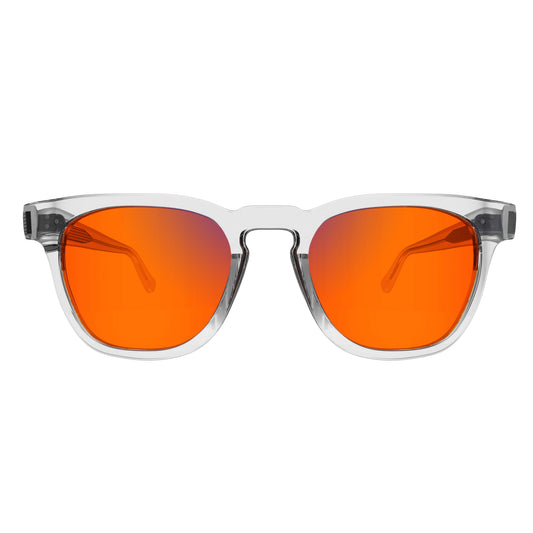
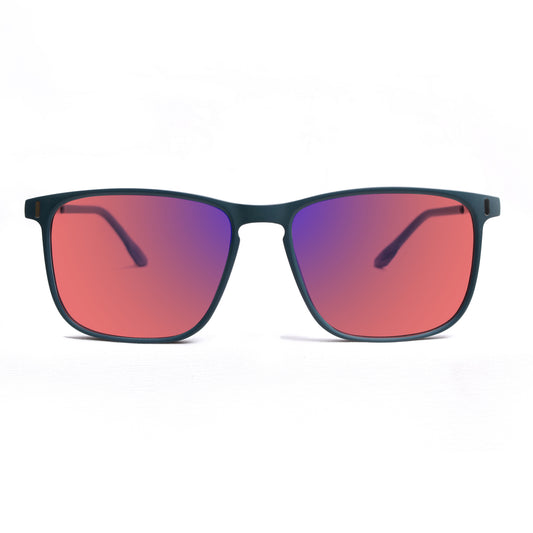
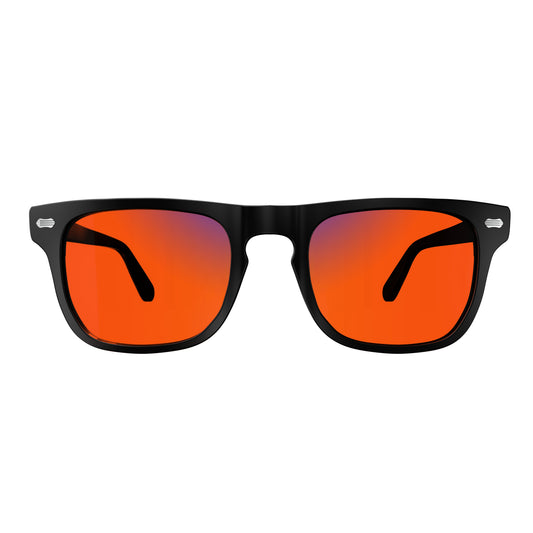
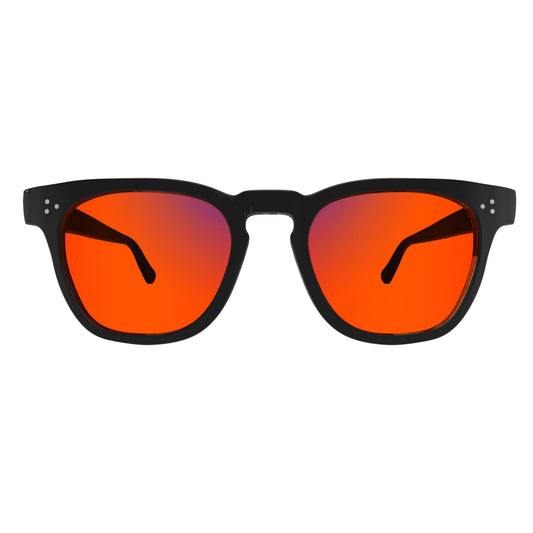
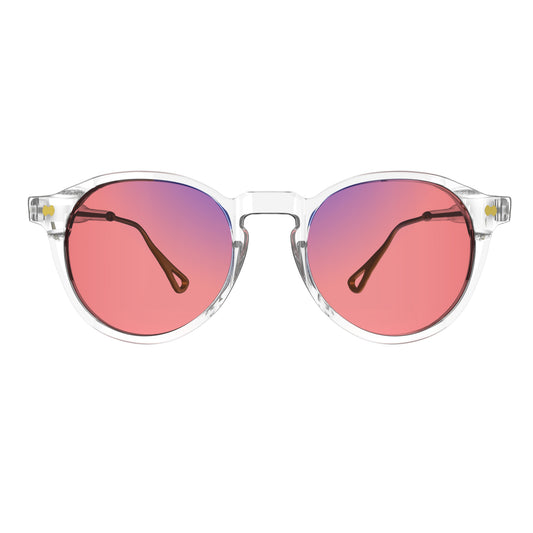
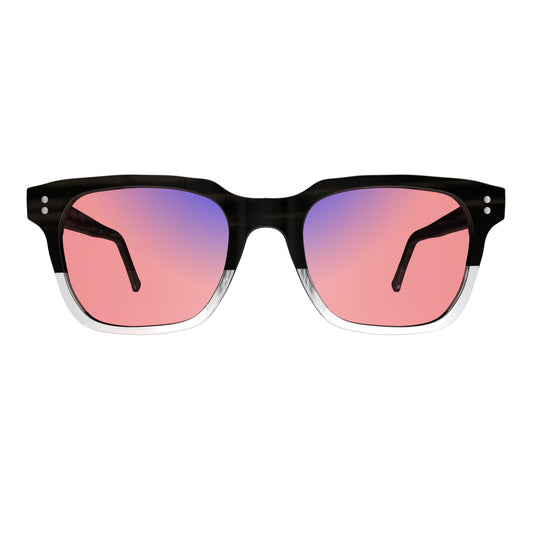
Sleepaxa FL-41 Dark measures 13.8% transmission at 450 nm and 12.6% at 520 nm, with the rose band preserved (100% above 670 nm), overall luminous transmittance 41.1% (Filter Category 2). FL-41 Light uses the same notch at higher brightness for all-day indoor wear. Every tint batch is checked on a spectrophotometer.
Which one should you try?
- Office lights, screens, mild–moderate sensitivity → FL-41 Light
- Severe photophobia or flare-up days → FL-41 Dark
- You wear glasses → get the tint in your prescription
Keep reading
- Best migraine glasses 2026
- Blue-light glasses vs FL-41
- Am I light sensitive? A quick self-check
- Flickering lights and migraine
- Migraine with aura and light sensitivity
- Sleepaxa facts: research, patents and lab
Educational content based on published research. Sleepaxa lenses help manage light sensitivity and are not a medical device; they do not diagnose, treat, cure, or prevent any condition. If you experience frequent or severe migraine, consult a healthcare professional.
Tags:
Previous
Vestibular Migraine & Light Sensitivity: What Helps (2026)
Next
Office & Fluorescent Light Sensitivity: A 2026 Survival Guide


