
Best Sleep Glasses 2026: Amber vs Red Blue Light Blocking Glasses, Explained by an Optometrist
Most "blue light glasses" sold for sleep are clear or lightly tinted lenses that still let through the light your body reads as daytime. If you want glasses that actually help you wind down and fall asleep, the cut-off wavelength matters more than the colour. As an optometrist, here is how to choose sleep glasses in 2026 — amber vs red, how much blue light they really need to block, when to wear them, and which pair fits your evening.
By Suraj Dubey, optometrist (10+ years, 10,000+ eye exams) · Updated October 2026 · Ships to the US, Europe and worldwide
Quick answer
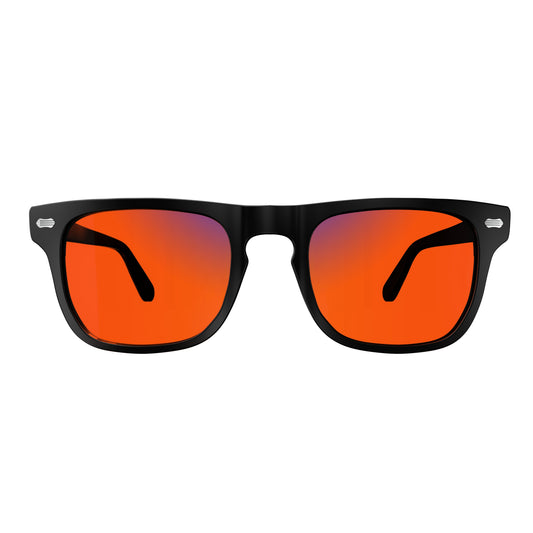
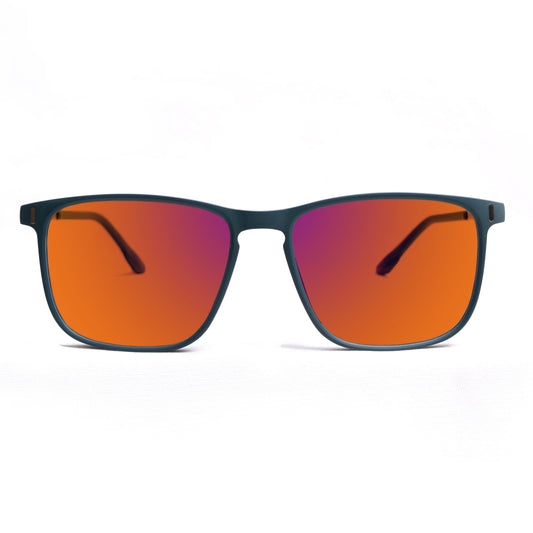
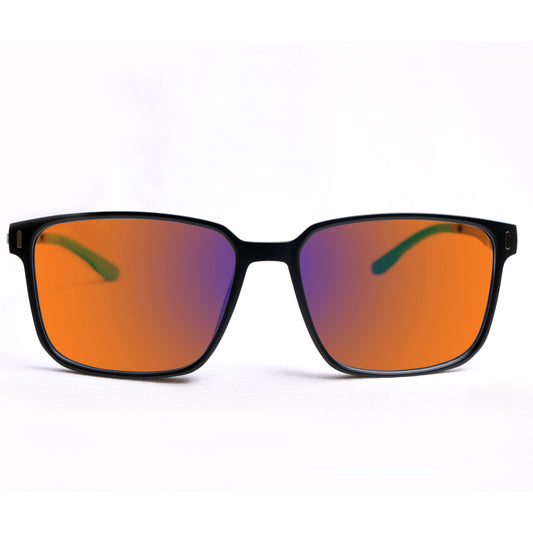
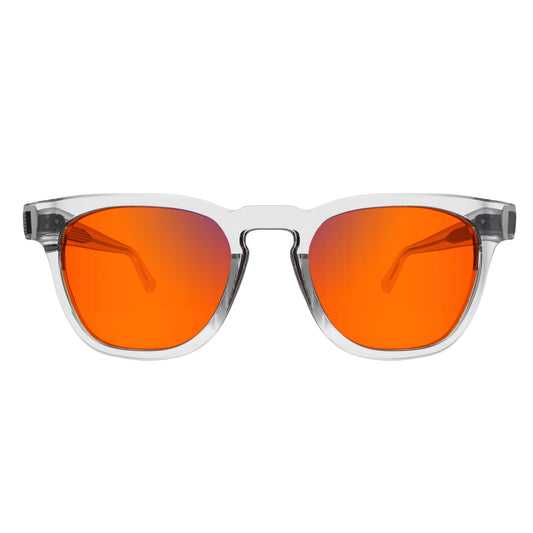
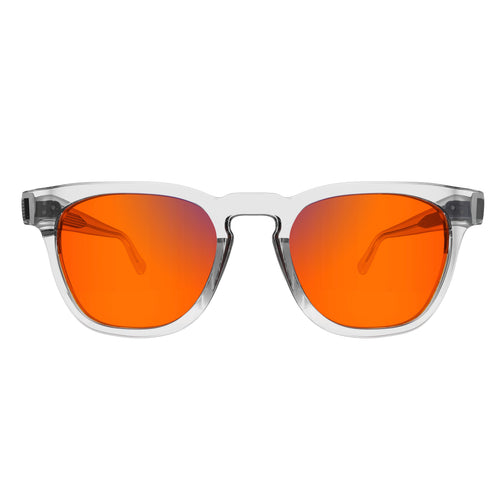
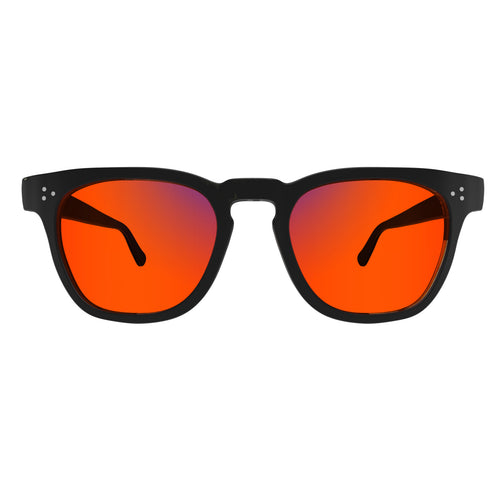
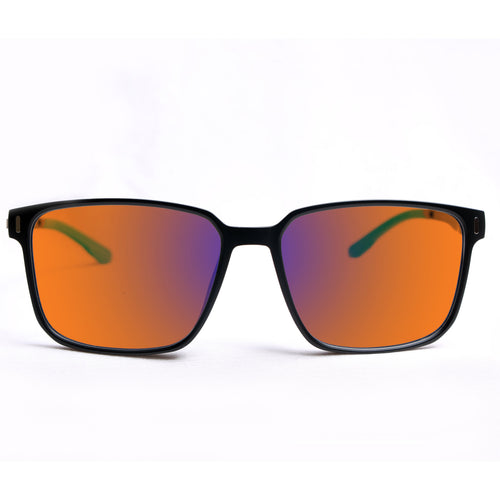
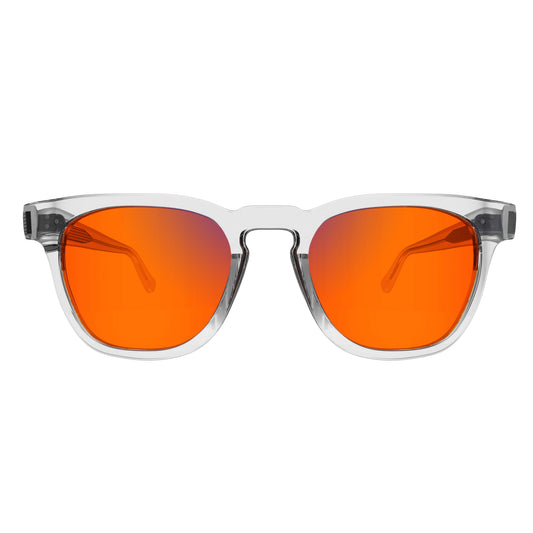
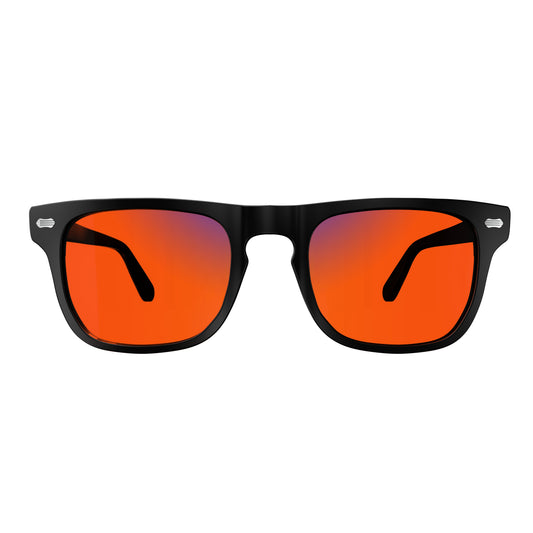
The best sleep glasses block 100% of light below a stated wavelength — not "up to 90% of blue light". Wear an Amber lens (99.5%+ blocked to 500 nm) through the evening, and switch to a Red lens (100% blocked to 560 nm) for the last 1–2 hours before bed. Every Sleepaxa sleep frame comes with both lens options, in zero power or your prescription.


Free US & EU shipping, duties included · Worldwide delivery · 30-day returns on zero-power glasses
Amber or Red: pick your lens
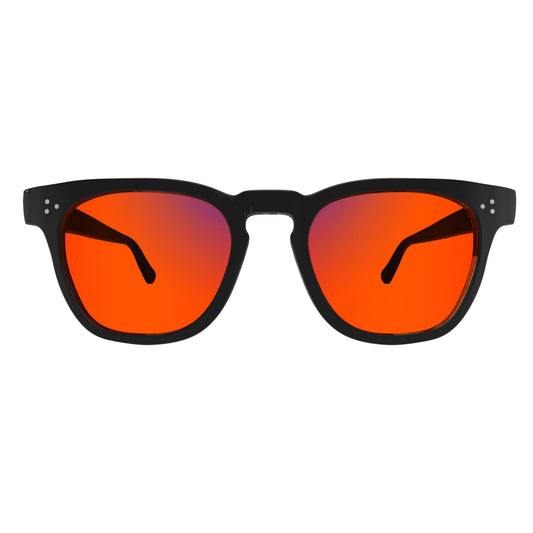
Amber · day & evening
99.5%+ blocked to 500 nm
Removes virtually all violet and blue light (just 0.48% passes at 500 nm, measured), including the 460–490 nm band your body clock is most sensitive to. Colours stay usable, so you can cook, read, scroll and watch TV. Indoors and outdoors.
Wear: from sunset, or 2–3 hours before bed · late-night screens · evening shifts
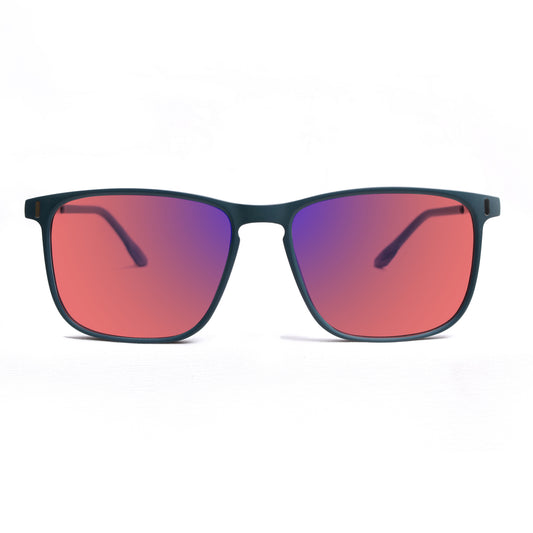
Shop Amber sleep glasses →Red · last 1–2 hours
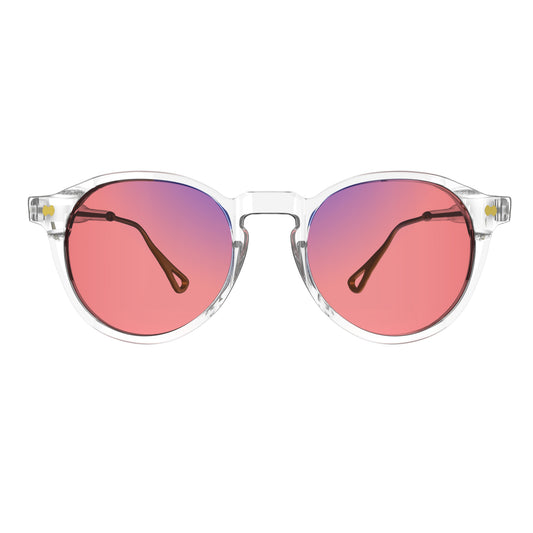
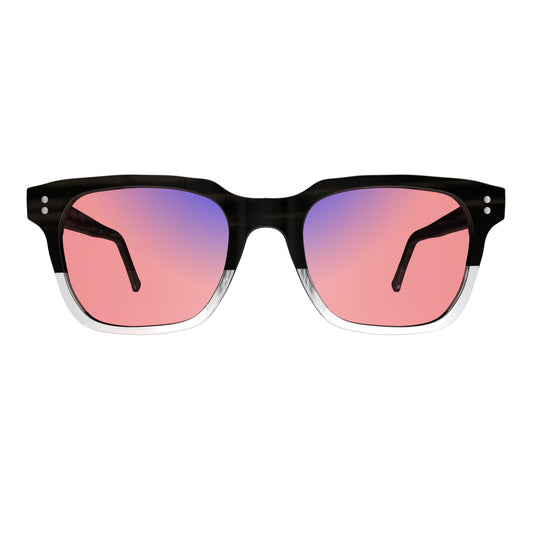
100% blocked to 560 nm
Removes blue and blue-green light, so almost nothing that signals "daytime" reaches the eye. Zero measured transmission from 380 to 560 nm. Inspired by our patented Circadian560 research. Indoor use only.
Wear: the final 1–2 hours before lights-out · night feeds · after a late shift
Shop Red sleep glasses →The research behind Red
Circadian560
Our team's patented circadian lens technology (patent no. 597482), designed around a 560 nm cut-off so even the green light that still nudges melanopsin is removed. Sleepaxa's Red lens is inspired by this research.
Built for: the darkest possible pre-sleep window
See the patent →Can't decide? Every Sleepaxa sleep frame lets you choose Amber or Red on the product page. Most people start with Amber for the evening; light sleepers, shift workers and anyone who scrolls in bed usually add Red for the last stretch.
Why light at night keeps you awake
Your eyes contain a third type of light sensor — melanopsin cells (ipRGCs) — that don't help you see but tell your brain whether it is day or night. They respond most strongly to blue light around 460–480 nm. When phones, laptops, TVs and white LED bulbs hit those cells in the evening, the brain reads "daytime" and holds back melatonin, the hormone that makes you sleepy. Classic work on the melatonin action spectrum (Brainard et al., Journal of Neuroscience, 2001) placed peak sensitivity in this blue band.
Dimming screens or using "night mode" helps a little, but most indoor lighting still carries plenty of blue. Blocking it at the eye is the most reliable way to give your body clock a clear "night" signal.
Do blue light glasses actually help you sleep?
The evidence is for strongly tinted amber or red lenses worn in the evening — not clear "blue light" coatings:
- Burkhart & Phelps (Chronobiology International, 2009): adults who wore amber lenses for three hours before bed reported better sleep quality and mood than a control group.
- Shechter et al. (Journal of Psychiatric Research, 2018): people with insomnia symptoms who wore amber lenses for two hours before bed for a week reported longer, better-quality sleep.
- van der Lely et al. (Journal of Adolescent Health, 2015): blue-blocking glasses reduced the melatonin suppression caused by evening LED screen use and made participants feel sleepier.
What doesn't work as well: clear or pale-yellow lenses that block only a small share of blue light. They may feel nicer on the eyes, but they leave most of the melatonin-suppressing band untouched. Results also vary from person to person — glasses work best alongside a regular bedtime and a dark bedroom.
Sleep glasses compared: what each lens blocks
| Lens type | Blocks | Good for sleep? | When |
|---|---|---|---|
| Clear "blue light" coating | A small share of 400–450 nm | Minimal | Daytime screens |
| Yellow (e.g. DayActive) | Part of the blue band | Not for night | Daytime glare & focus |
| Sleepaxa Amber | 99.5%+ to 500 nm | Yes | Evening, 2–3 h before bed |
| Sleepaxa Red | 100% to 560 nm | Yes — strongest | Last 1–2 h before bed |
| Circadian560 (patented research) | 560 nm cut-off design | Inspires the Red lens | — |
"Blocked to 500 nm" vs "blocks 90% of blue light"
Many sleep glasses advertise a percentage — "blocks 90% of blue light" — without saying which wavelengths. A lens can hit 90% at 420 nm and still pass most light at 470 nm, right where melanopsin is most sensitive. The number that matters is the cut-off: the wavelength below which 100% is blocked. Sleepaxa states it for every lens (99.5%+ to 500 nm for Amber, 100% to 560 nm for Red) and checks each tint batch on a spectrometer. You can see our measurements on the research page.
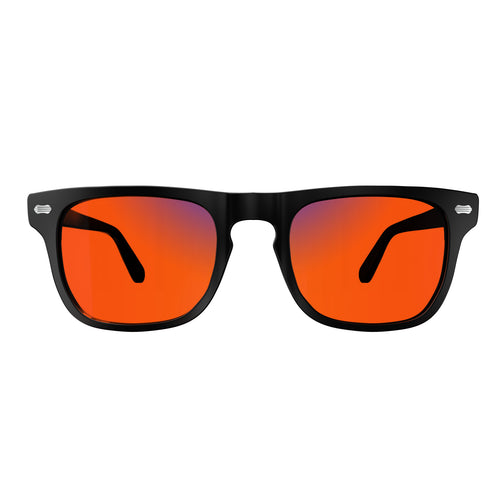
Two other things to check: side coverage (light leaking in around a small frame undoes the lens) and comfort — you need to wear them every evening, often on the sofa or in bed, so weight matters. Sleepaxa offers 55 frames, from featherlight ULTEM to Italian acetate, including wide and extra-wide fits.
How to use sleep glasses: a simple evening routine
- After sunset (or 3 hours before bed): put on Amber. Carry on as normal — dinner, screens, TV.
- 1–2 hours before bed: switch to Red, especially if you'll be on your phone or under bright ceiling lights.
- Lights out: take them off in the dark. Keep the bedroom dark; if you get up at night, put Red on before switching on a light.
- Morning: get daylight in your eyes early — it strengthens the contrast your body clock needs.
Most people notice a difference in how sleepy they feel within the first week. Consistency matters more than any single night.
Who benefits most
- Late-night screen users who struggle to switch off after work, gaming or streaming
- Night owls trying to shift to an earlier bedtime
- Shift workers — wear Red on the commute home after a night shift and before daytime sleep (see our shift-work sleep guide)
- Travellers adjusting to a new time zone
- New parents doing night feeds under a light
If you have ongoing insomnia, a sleep disorder or a mood condition, glasses can be one part of a routine, but speak with your doctor.
Prescription sleep glasses
If you wear glasses, you need the tint in your own prescription — fit-over and clip-on blockers leak light and are uncomfortable to wear on the sofa or in bed. Sleepaxa makes Amber and Red lenses in single vision, progressive, bifocal and prism, with high-index 1.67 / 1.74 for stronger powers, cut on prescription-grade CR-39 in our own optical lab. Choose "Prescription Lens" on any sleep frame and our optometry team checks every prescription before your lenses are made.
Shipping: US, Europe and worldwide
| Destination | Shipping | Zero power | Prescription |
|---|---|---|---|
| United States | Free, duties included | 7–11 business days | 11–15 business days |
|
European Union Germany, France, Netherlands, Ireland, Italy, Spain, Sweden and more |
Free, duties & VAT included | 9–11 business days | 9–14 business days |
| UK, Canada, Australia & rest of world | Calculated at checkout; local duties may apply | 9–14 business days | 13–18 business days |
Every order is tracked. Full shipping policy · Returns policy
Ready for better evenings?
55 frames · Amber or Red · zero power or prescription · from $93
Shop Sleep Glasses →FAQ
Do blue light blocking glasses help you sleep?
Strongly tinted amber or red glasses worn in the evening can help. Studies of amber lenses worn two to three hours before bed reported better sleep quality. Clear blue-light coatings block too little to make much difference.
Amber vs red glasses for sleep — which is better?
Amber (99.5%+ blocked to 500 nm) is best for the whole evening because colours stay usable. Red (100% blocked to 560 nm) blocks more and is best for the last one to two hours before bed. Many people use both.
How long before bed should I wear blue light glasses?
Start two to three hours before bed with Amber, and switch to Red for the final one to two hours.
Do I need glasses that block 100% of blue light?
For sleep, you want as close to 100% as possible. What matters is the measured cut-off wavelength, such as 500 nm or 560 nm, rather than a vague percentage.
Can I wear sleep glasses while using my phone or watching TV?
Yes — that is exactly when they are most useful. Screens still look clear, just warmer in colour.
Can I get sleep glasses in my prescription?
Yes. Sleepaxa makes Amber and Red lenses in single vision, progressive, bifocal and prism prescriptions, with high-index options.
Are sleep glasses good for night shift workers?
Yes. Wearing Red on the way home after a night shift and before daytime sleep helps your body treat that time as night.
Can I drive with amber or red sleep glasses?
Not at night. They reduce the light reaching your eyes and change how colours look, including traffic signals.
Do you ship sleep glasses to Europe and the UK?
Yes. Shipping to EU countries is free with duties and VAT included. The UK and the rest of the world are shipped at a rate calculated at checkout.
Shop Amber & Red Sleep Glasses →
Related: Shift-work sleep and your body clock · The light spectrum guide for sleep and migraine
Educational content written by an optometrist. Individual experience varies; speak with your doctor about ongoing sleep problems.
Tags:
Previous
Shift Work & Sleep: How to Protect Your Body Clock (2026)
Next
Shift Work & Sleep: How to Protect Your Body Clock (2026)