


Light Sensitivity After a Concussion: Glasses, Recovery and What Helps
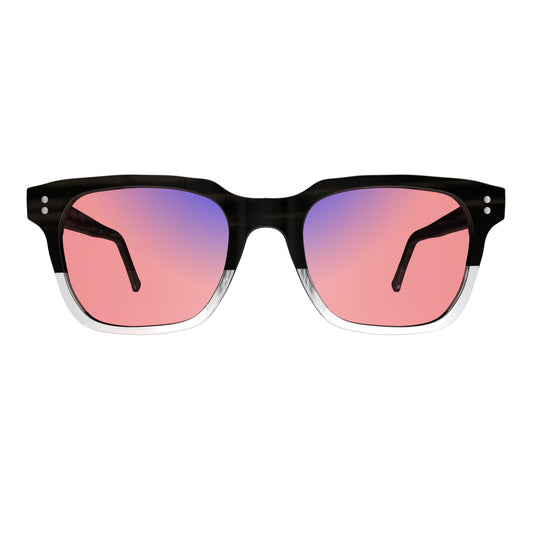
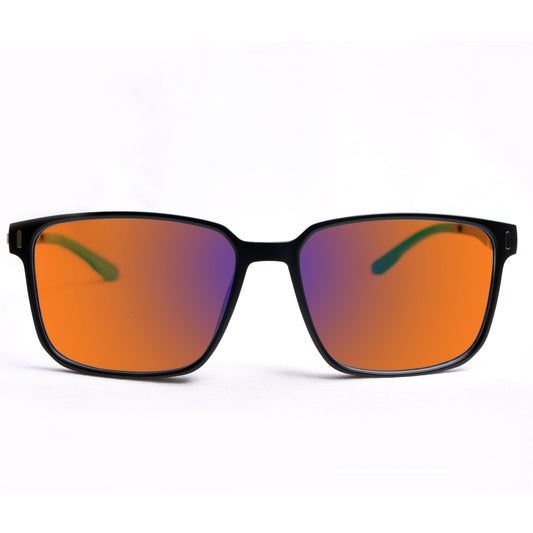
Short answer: light sensitivity is one of the most common symptoms after a concussion. Many clinicians recommend avoiding dark sunglasses indoors and instead using a selective tint such as FL-41 Light for screens and indoor lighting, while gradually re-exposing yourself to normal light as advised by your care team. Glasses are a comfort tool during recovery, not a treatment for the concussion itself.
Sleepaxa Optometry Team · Updated October 2026
Seek urgent care after a head injury if there is a worsening headache, repeated vomiting, confusion, increasing drowsiness, slurred speech, weakness or numbness, seizures, unequal pupils, or vision loss.
Why light hurts after a concussion
A concussion is a mild traumatic brain injury that temporarily disrupts how the brain processes information, including visual input. Several mechanisms are thought to contribute to post-concussion photophobia:
- Central sensitisation: after injury, the brain's sensory processing can become hyper-responsive, so ordinary light feels intense.
- Melanopsin–thalamic pathway: light-sensing ipRGC cells signal to the thalamus, where light and pain signals converge — the same pathway involved in migraine photophobia (Noseda et al., 2010).
- Post-traumatic headache: many people develop migraine-like headaches after concussion, which often come with light sensitivity.
- Visual-system strain: focusing and eye-teaming (convergence) problems are common after concussion and add to discomfort with screens and reading.
We review the light–pain pathway in Photophobia in Migraine (DOI 10.5281/zenodo.19644849) and prevalence in The Light-Sensitivity Epidemic (DOI 10.5281/zenodo.19683319).
Why dark sunglasses indoors can backfire
It's natural to reach for sunglasses. But wearing dark lenses all day indoors lets the visual system dark-adapt, which can make normal light feel even brighter and may prolong sensitivity. Concussion specialists generally favour gradual re-exposure to normal light, supported by a lighter, selective tint rather than darkness.
How tinted lenses fit into recovery
| Stage | Light approach | Lens |
|---|---|---|
| First days | Relative rest, limited screens, as advised | FL-41 Dark if light is very painful |
| Returning to activity | Gradual increase in screen and light exposure | FL-41 Light for screens and indoor lighting |
| Back to work/school | Breaks, workstation adjustments | FL-41 Light; reduce use as tolerated |
| Persistent symptoms | Specialist assessment (neuro-optometry, vestibular, headache) | Tint as part of a wider plan |
Evidence specifically on FL-41 after concussion is limited. Our recommendation is based on its research in migraine and other photophobia conditions (Good et al., 1991; Blackburn et al., 2009; Katz & Digre, 2016) and on common clinical practice. Follow your care team's guidance on timing.
Other visual problems to check after a concussion
- Convergence insufficiency — eyes struggle to work together at near; common after concussion
- Accommodative problems — focusing becomes tiring
- Eye-movement problems — reading and scrolling feel difficult
- Visual motion sensitivity — busy environments trigger dizziness (see vestibular migraine and light)
An optometrist with neuro-optometric or binocular vision experience can assess these. Some people benefit from a prescription change, prism or vision therapy alongside a tint.
A lighter, selective tint for recovery
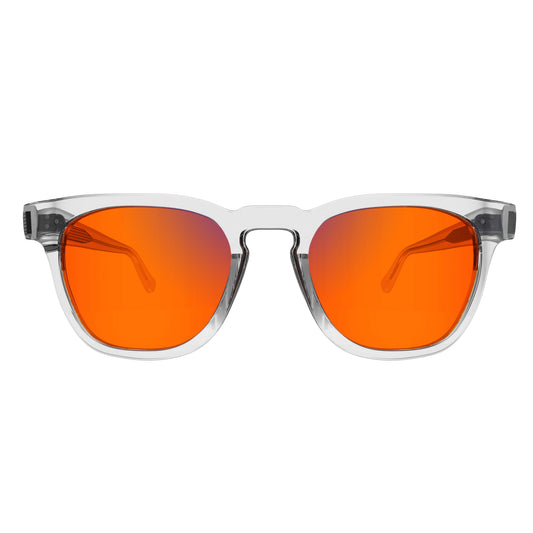
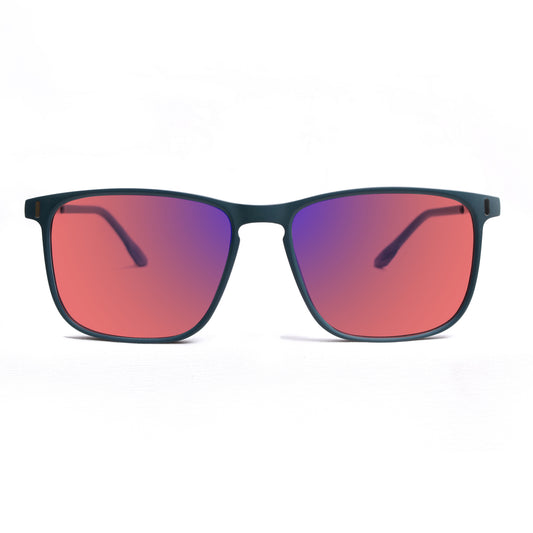
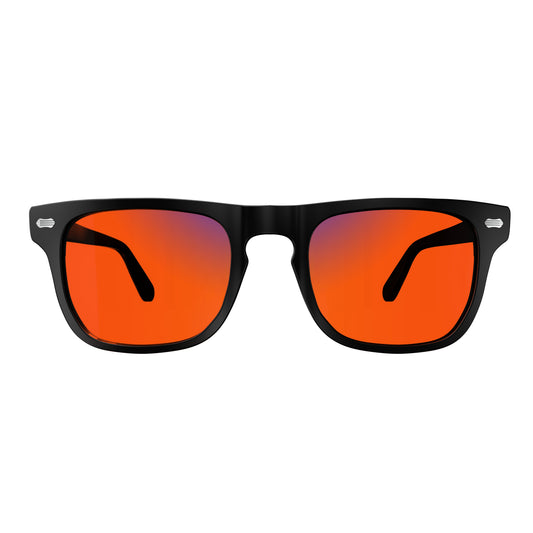
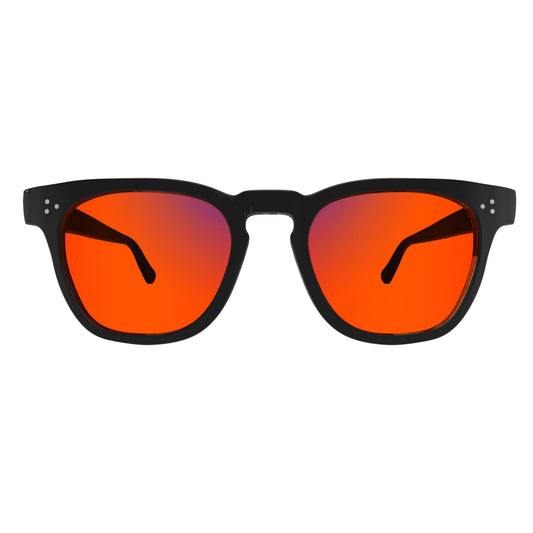
FL-41 Light & Dark · zero power, prescription or prism · from $99
Shop FL-41 Glasses →Practical tips for screens after a concussion
- Short sessions with breaks; increase gradually
- Dark mode and moderate brightness; enable anti-flicker settings
- Larger text to reduce focusing effort
- Warm, diffused room lighting; avoid bare overhead panels
- FL-41 Light during screen time
Keep reading
- Photophobia & light sensitivity guide
- FL-41 Light vs Dark
- Am I light sensitive?
- Best lighting for migraines
FAQ
Why am I sensitive to light after a concussion?
Concussion can make the brain's sensory processing hyper-responsive, and light-sensing retinal cells signal to areas involved in pain. Post-traumatic headache and visual strain also contribute.
What glasses help with light sensitivity after concussion?
Many clinicians suggest a selective tint such as FL-41 Light for screens and indoor lighting rather than dark sunglasses, alongside gradual re-exposure.
Should I wear sunglasses inside after a concussion?
Generally not all day; dark-adapting can prolong sensitivity. Use sunglasses outdoors and a lighter selective tint indoors.
How long does light sensitivity last after a concussion?
It often improves over days to weeks; persistent symptoms beyond a few weeks should be assessed by a specialist.
Can I get FL-41 in my prescription or with prism?
Yes, Sleepaxa makes FL-41 in single vision, progressive, bifocal and prism.
Educational content written by optometrists. Not a substitute for medical assessment; follow your doctor's or care team's advice after any head injury.
Tags:


