


Best Lighting for Migraines: Light Bulbs, Colour Temperature, Green Light and Glasses (2026)
If you live with migraine, the lights around you matter. The wrong bulb can make a room feel aggressive; the right setup can make home and work far more comfortable. Here's an optometrist's guide to migraine-friendly lighting in 2026: colour temperature, flicker, glare, the buzz around green light, and where glasses fit in.
Sleepaxa Optometry Team · Updated October 2026
Quick answer
Choose warm (2700–3000 K), flicker-free, dimmable bulbs, use diffused lamps instead of bare overhead panels, and control glare. For places you can't control — offices, shops, hospitals — wear a verified FL-41 lens.
Shop FL-41 glasses →Which light is hardest on a migraine brain?
People with migraine tend to find blue and blue-green light the most uncomfortable, while narrow-band green light is often best tolerated. A Harvard study (Noseda et al., Brain, 2016) found green light was least likely to worsen headache intensity during attacks. We review these wavelength effects in Photophobia in Migraine: Neural Mechanisms and Wavelength-Selective Management (DOI 10.5281/zenodo.19644849).
The best light bulbs for migraine
| Choose | Avoid |
|---|---|
| Warm white, 2700–3000 K | Cool or daylight white (5000 K+) in living spaces |
| Labelled flicker-free / low percent flicker | Cheap dimmable LEDs that flicker when dimmed |
| Diffused shades, indirect and lamp light | Bare bulbs and harsh overhead panels |
| Dimmers with quality drivers | Very bright light in small rooms |
| High CRI (90+) for natural colours | Strong glare off glossy surfaces |
Flicker is covered in depth in flickering lights and migraine.
What about green light therapy?
Green light has become a popular topic. In a small trial (Ibrahim et al., Cephalalgia, 2021), people with migraine who spent 1–2 hours a day in narrow-band green LED light reported fewer headache days over 10 weeks. It's promising but early research, and it's a therapy lamp question, not a glasses question. Talk to your doctor before relying on it.
Room by room
- Bedroom: warm, dim lamps; no bright overhead light at night. For sleep, see Amber and Red sleep glasses.
- Home office: daylight from the side, a warm desk lamp, screen brightness matched to the room.
- Kitchen and bathroom: diffused fittings, avoid bare spotlights reflecting off tiles.
- Car: polarised sunglasses by day; FL-41 is not for night driving.
When you can't change the lighting
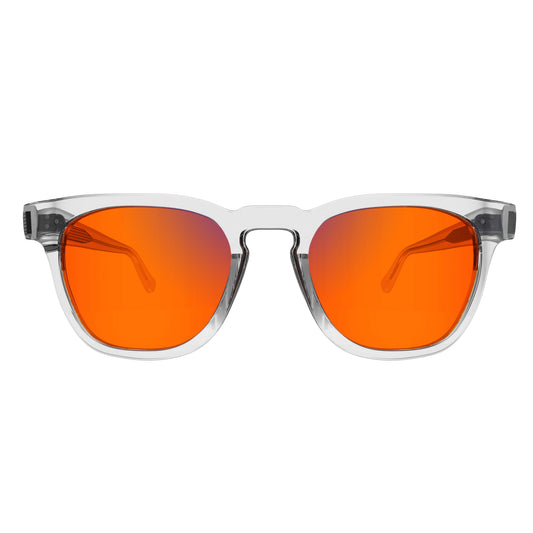
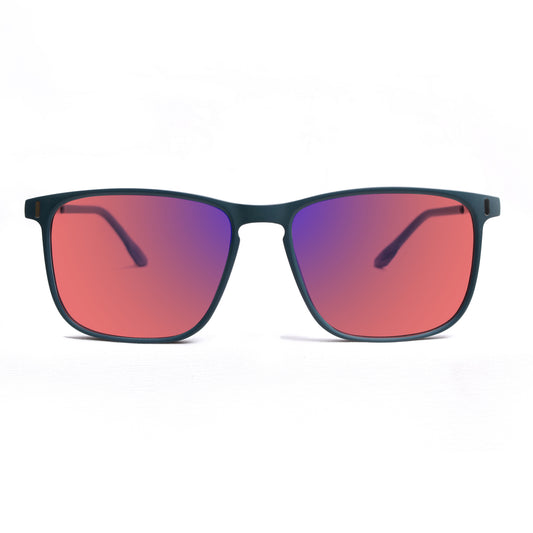
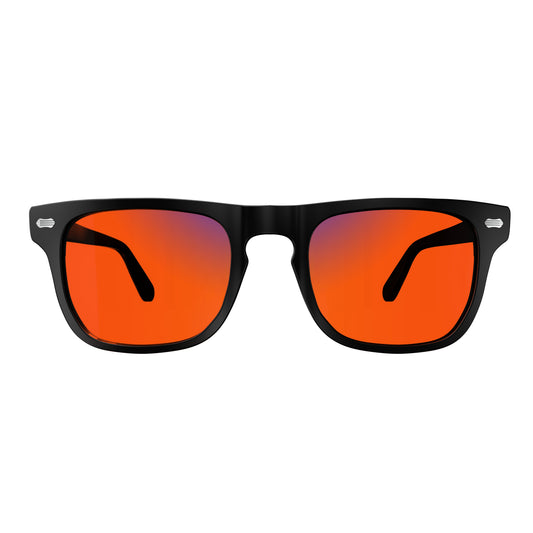
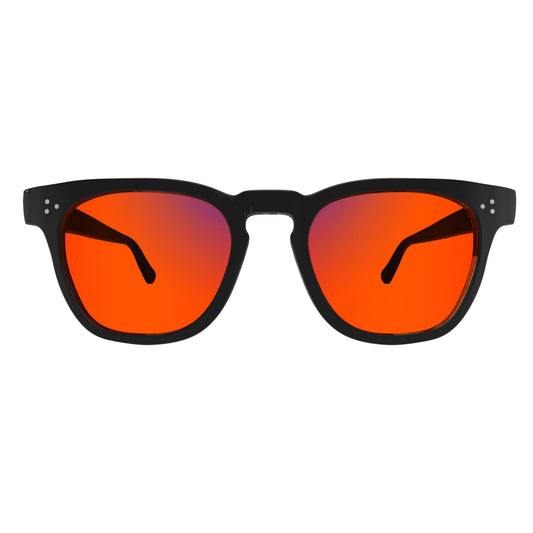
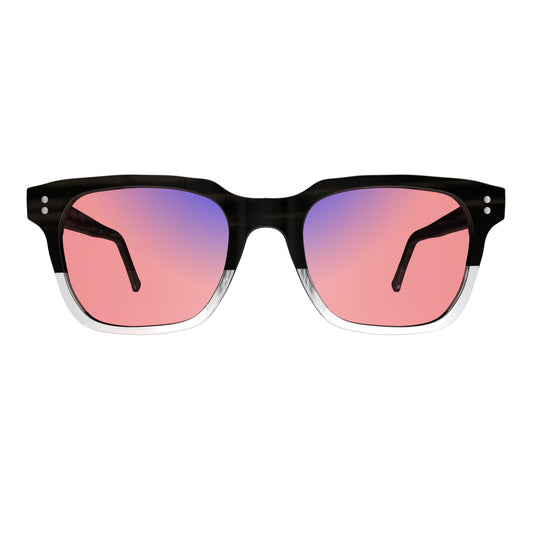
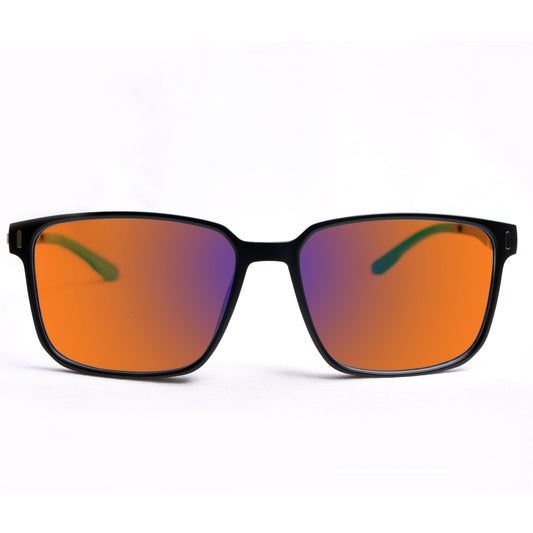
Offices, classrooms, supermarkets and hospitals are lit with bright, cool-white light you can't control. That's where glasses do the heavy lifting. FL-41 filters the blue-green band around 480–520 nm while keeping vision bright enough for all-day wear. Sleepaxa FL-41 Dark measures 13.8% at 450 nm and 12.6% at 520 nm with the rose band preserved. The selective-filter approach is explained in Wavelength-Selective Filtration in Photobiological Eyewear (DOI 10.5281/zenodo.19422123) and Dual-Band Selective Light Attenuation (DOI 10.5281/zenodo.19547790).
Take migraine-friendly light with you
FL-41 Light & Dark · spectrometer-verified · zero power to prism · from $99
Shop FL-41 Glasses →Related: photophobia guide · migraine aura and light · PWM screen headaches.
FAQ
What color light is best for migraines?
Warm white for general lighting. In research, narrow-band green light was the least likely to worsen headache, while blue light was among the worst.
Are LED lights bad for migraines?
Not inherently. Warm, flicker-free, diffused LEDs are fine for most people. Cool-white, flickering or glaring LEDs are more likely to cause problems.
Does green light therapy work for migraine?
Early research is promising, but studies are small. Discuss it with your doctor.
What glasses help with bright office lights?
FL-41 Light is designed for all-day wear under office lighting.
Educational content written by optometrists. Individual experience varies; speak with your doctor about migraine treatment.
Tags:
Previous
Am I Light Sensitive? Photophobia Symptoms, Causes and a Quick Self-Check
Next
Do Migraine Glasses Actually Work? An Evidence-Based Answer (2026)


