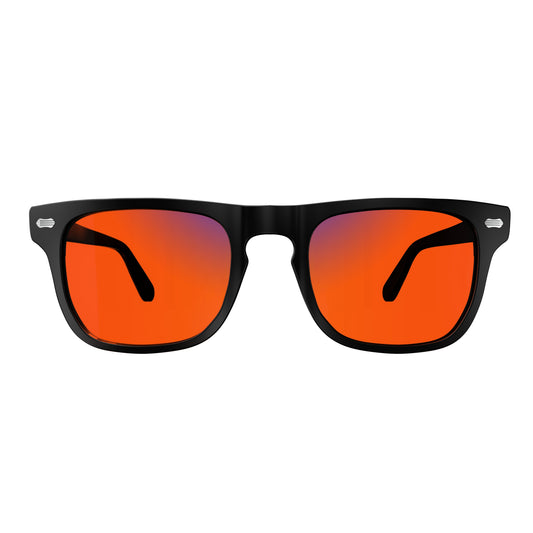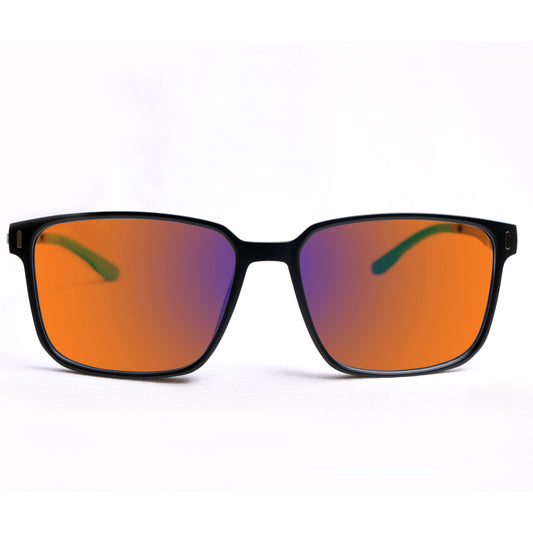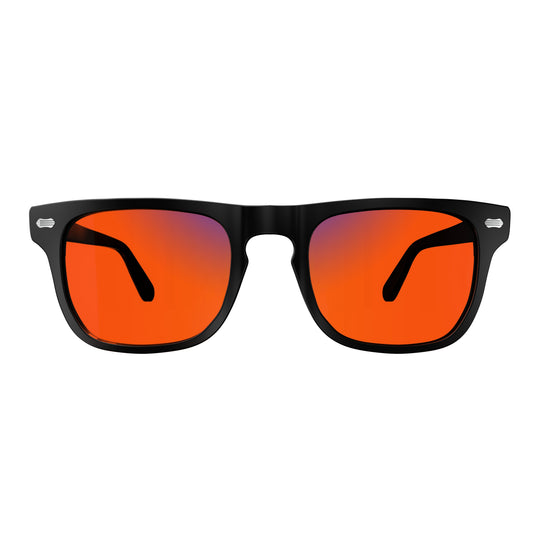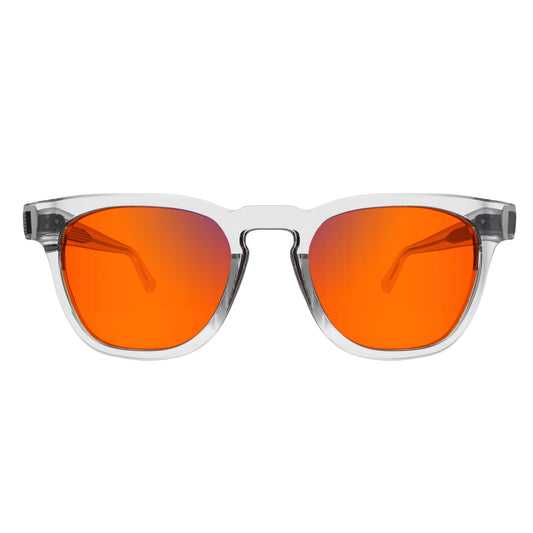
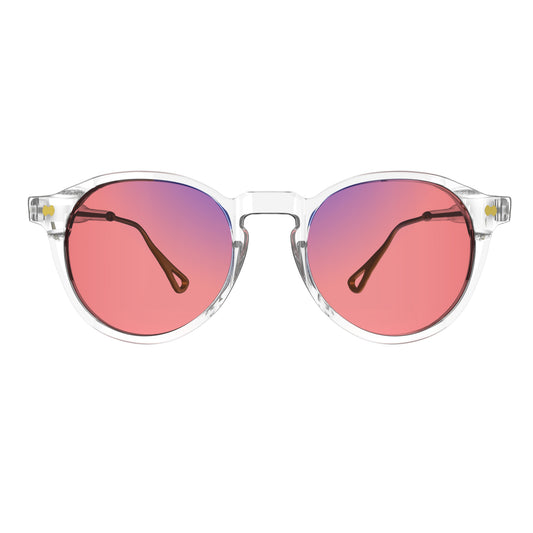
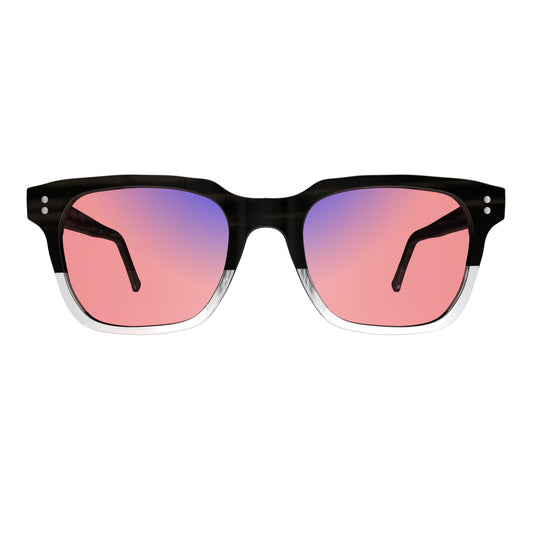

Red vs Amber vs Orange Blue Blocker Glasses: Which Is Best for Sleep? (2026)
Red, amber, orange, yellow — "blue blocker" glasses come in every shade, and sleep routines online recommend all of them. The colour you see is not what matters. What matters is which wavelengths the lens actually removes. Here's a clear, data-based comparison so you can pick the right pair.
Sleepaxa Optometry Team · Updated October 2026
Quick answer
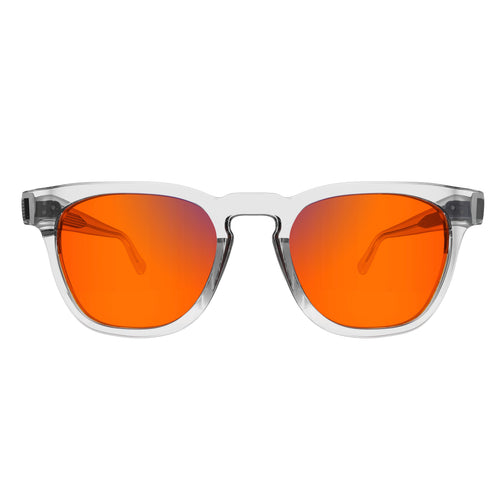
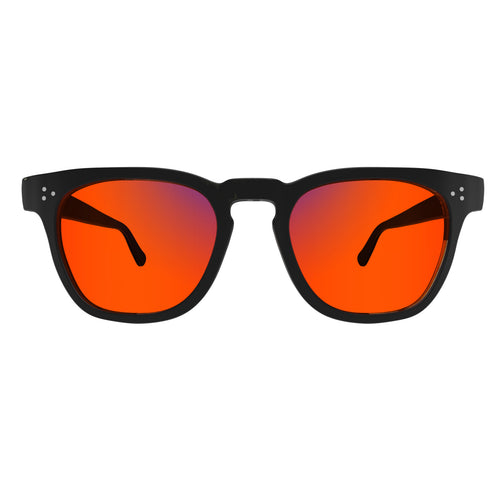
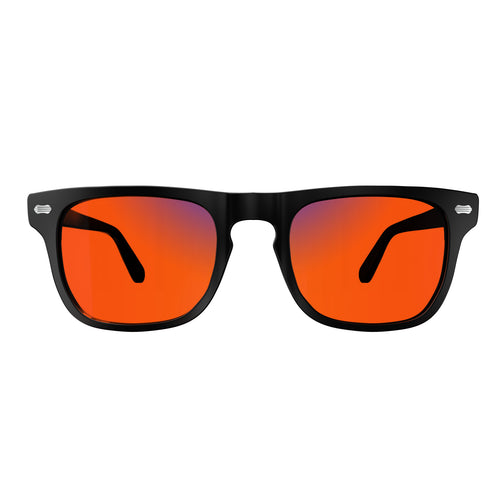
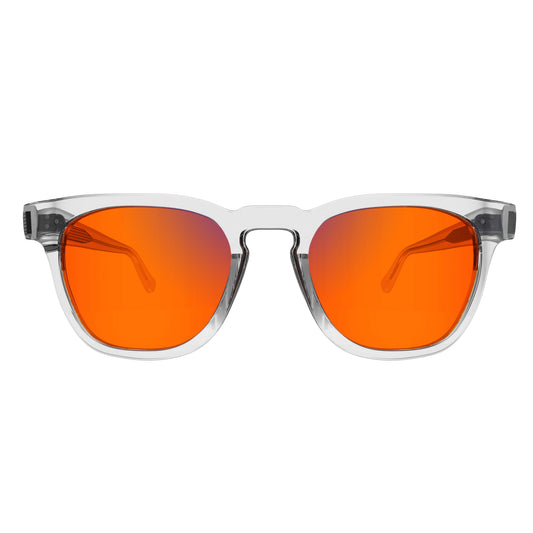
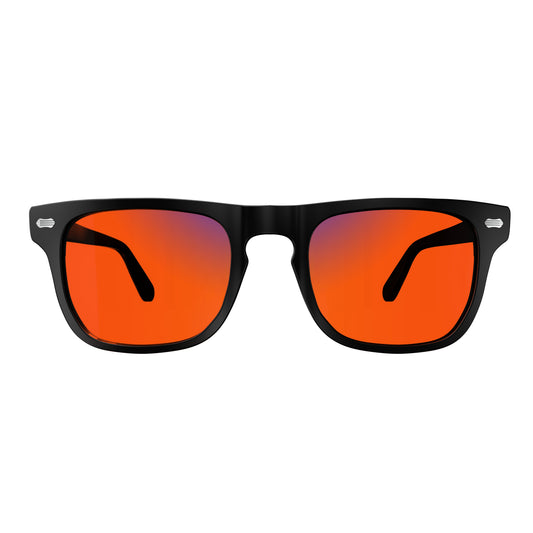
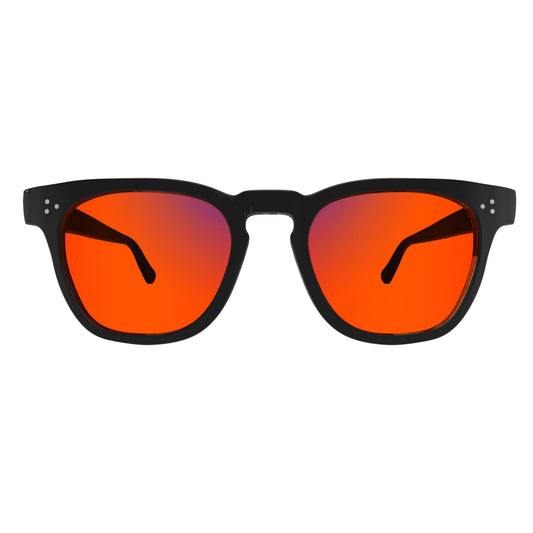
Red is the strongest for sleep (ours: 100% blocked to 560 nm) and best for the final 1–2 hours before bed. Amber/orange (ours: 99.5%+ blocked to 500 nm) is better for the whole evening because you can still see colours well. Yellow is a daytime screen lens, not a sleep lens.
Shop Amber & Red glasses →Why colour alone tells you nothing
Two lenses can look the same orange and filter very differently. One might block everything below 500 nm; another might still pass 20–30% of light at 470 nm, right where the melanopsin system is most sensitive. The only honest specification is a transmission curve or a measured cut-off. We explain this in Wavelength-Selective Filtration in Photobiological Eyewear (DOI 10.5281/zenodo.19422123), and why many clear "blue light" products fall short in Limitations of Commercial Blue-Light-Filtering Spectacle Lenses (DOI 10.5281/zenodo.19762610).
Red vs amber vs orange vs yellow
| Lens | Typically blocks | Best use | Trade-off |
|---|---|---|---|
| Red (Sleepaxa) | 100% to 560 nm, measured | Last 1–2 h before bed | Strong red cast, indoors only |
| Amber (Sleepaxa) | 99.5%+ to 500 nm, measured | Whole evening | Warm colours, still usable |
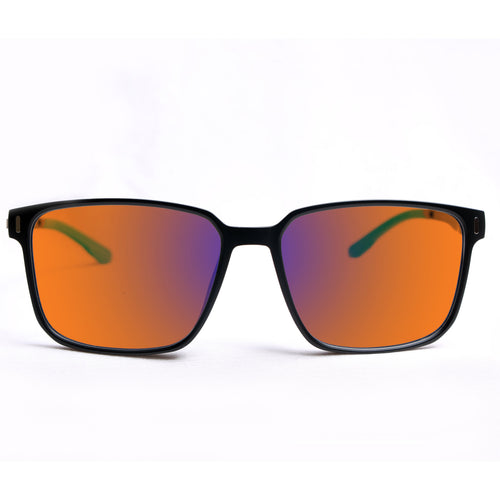
| Generic orange | Varies widely; often unpublished | Evening, if verified | May leak blue-green light |
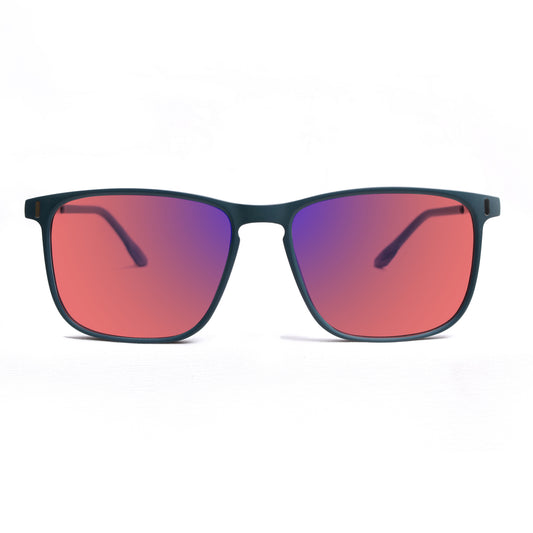
| Yellow (e.g. DayActive) | Part of the blue band | Daytime screens | Not designed for sleep |
| Clear blue-light | Small share of 400–450 nm | Mild screen comfort | Minimal effect on body clock |
Why red is the strongest
Melanopsin's sensitivity doesn't stop sharply at 500 nm; it tails off into the green. A lens that removes light up to 560 nm leaves almost nothing that can signal "daytime". That is the principle behind Circadian560, our team's patented lens technology (patent no. 597482), described in Circadian560 Spectral Engineering: Sub-560 nm Cutoff for Maximum Melanopic Protection (DOI 10.5281/zenodo.19594265). Our Red lens is inspired by this research and measures zero transmission from 380 to 560 nm.
Why most people should own both
Red is so strong that cooking, reading labels or watching a film becomes awkward for hours. Amber blocks virtually all blue light while keeping colours usable, so it suits the whole evening. Switching to Red for the final stretch, especially if you're on your phone in bed, gives you the deepest night signal when it matters most.
- Sunset to 2 h before bed: Amber
- Last 1–2 hours: Red
- Morning: no glasses, bright daylight
Choose Amber or Red on every frame
55 frames · measured lenses · zero power or prescription · from $93
Shop Sleep Glasses →How to check any blue blocker before you buy
- Does the brand publish a transmission curve or a cut-off wavelength?
- Is the lens tested to EN ISO 12312-1, ANSI Z80.3 or AS/NZS 1067.1?
- Do the frames block side light?
- Can you get it in your prescription?
Deeper dives: best sleep glasses 2026 · circadian rhythm glasses · why Sleepaxa.
FAQ
Are red or amber glasses better for sleep?
Red blocks more and is best for the final hour or two before bed. Amber is better for the whole evening because colours stay usable. Many people use both.
Do orange glasses work for sleep?
They can, if they block close to 100% of light below about 500 nm. Many generic orange lenses don't publish data, so check for a measured cut-off.
Are yellow glasses good for sleep?
No. Yellow lenses filter only part of the blue band and are designed for daytime screen comfort.
Can I wear red glasses outside?
Red lenses are for indoor evening use only. They reduce light significantly and change how colours, including traffic signals, look.
Educational content written by optometrists. Individual experience varies; speak with your doctor about ongoing sleep problems.
Tags:
Previous
Blue Light and Melatonin: Why Your Phone Keeps You Awake (and What Actually Helps)
Next
Jet Lag Glasses: How to Beat Jet Lag Faster by Timing Light (2026 Guide)